
A case study of a high-performing professional and the path back to balance
At first, nothing seemed wrong.
Maya was doing well at work. She met deadlines, responded quickly to emails, and was seen as someone others could rely on. If anything, she was doing more than expected. She had built a reputation for being dependable and consistent, and that mattered to her.
But something felt off.
She started noticing that she was tired all the time. Not just physically tired, but mentally drained in a way that did not go away, even after a full night of sleep. She would sit down to start tasks she had done many times before, and it suddenly felt harder to begin.
Still, she kept going.
From the outside, nothing had changed. From the inside, everything had.
How It Started
Maya worked in a fast-paced environment where things were always moving. There was always another project, another message, another expectation to meet.
She had always handled it well.
Over time, though, her workload increased. Not in a dramatic way, but gradually. She began taking on more responsibility, staying later when needed, and checking emails outside of work hours just to stay ahead.
At first, it felt manageable. She told herself it was temporary.
But it never really slowed down.
She began waking up already thinking about what needed to be done. Even when she was not working, her mind stayed active. Conversations replayed. Tasks felt unfinished. There was always something to prepare for.
She noticed she was more irritable, especially at home. Small things felt bigger than they should. She also started pulling back from things she used to enjoy, not because she did not care, but because she did not have the energy.
Still, she kept telling herself she just needed to push through.
When It Became Something More
The turning point was not dramatic.
There was no breakdown or clear moment where everything stopped.
Instead, Maya noticed that she no longer felt connected to her work.
Tasks that once felt engaging now felt heavy. She would sit in front of her computer and struggle to start, even when she knew exactly what needed to be done. She began procrastinating, which only made her feel worse.
She also started to feel a sense of guilt. She knew she was capable, so why did everything feel so hard?
This is when she started to wonder if something was actually wrong.
What Was Really Happening
When Maya began therapy, one of the first things she realized was that she was not “failing.”
She was burned out.
For a long time, she had been operating in a constant state of stress. Her body and mind had been working overtime to keep up with demands, without enough time to recover.
At some point, her system shifted from being able to keep up, to being overwhelmed.
What made it harder to recognize was that she was still functioning. She was still showing up, still getting things done. But it was taking much more effort than before.
Burnout does not always look like stopping. Sometimes it looks like continuing, but at a cost.
The Patterns That Kept It Going
As Maya started to understand her experience, a few patterns became clear.
She had a strong sense of responsibility. She did not like letting people down, so she often said yes to more than she realistically had time for.
She also tied a lot of her self-worth to her performance. Doing well at work was not just about success. It was about feeling like she was doing enough.
Because of this, slowing down felt uncomfortable. Rest did not feel like a break. It felt like falling behind.
These patterns were not obvious to her at first. They had been part of how she operated for a long time.
What Helped
Therapy did not focus on telling Maya to “just relax” or do less.
Instead, it focused on helping her understand what was happening and make changes that actually felt realistic.
One of the first things she worked on was noticing her limits. Not in a judgmental way, but in a way that helped her recognize when she was reaching a point of overload.
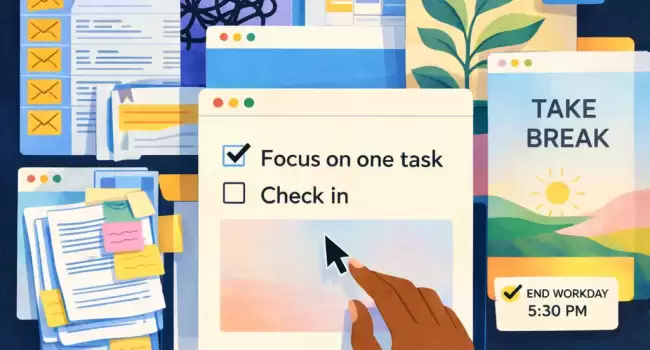
She also started paying attention to how she structured her day. Instead of working straight through until she was exhausted, she began building in short breaks. At first, this felt uncomfortable. Over time, it made a difference.
A few shifts that helped her most included:
- Setting a clearer end to her workday, even if everything was not finished
- Taking short breaks before she felt completely drained
- Focusing on one task at a time instead of constantly switching
- Checking in with herself throughout the day instead of pushing through
She also worked on how she thought about productivity.
Instead of measuring her worth by how much she got done, she began to look at what was sustainable. This did not happen overnight, but it started to change how she approached her work.
What Changed Over Time
The changes were not immediate, but they were noticeable.
Maya started feeling slightly more present during her day. Tasks still required effort, but they did not feel as overwhelming to start.
She also noticed that she was less irritable at home. She had more energy to engage in conversations and activities, even in small ways.
One of the biggest shifts was how she responded to stress. Instead of pushing through automatically, she began to pause and ask herself what she needed in that moment.
Sometimes the answer was to keep going. Other times, it was to step away briefly.
That pause made a difference.
What This Experience Reflects
Maya’s experience is common, especially among high-performing professionals.
Burnout does not always show up in obvious ways. It can look like continuing to function while feeling increasingly disconnected and exhausted.
It is also often tied to patterns that have been helpful in the past. Being responsible, driven, and committed are strengths. But without balance, they can also contribute to burnout.
Recognizing these patterns is not about criticism. It is about understanding how they are working now.
When to Pay Attention
If you are noticing that things feel harder than they used to, even if you are still functioning, it may be worth paying attention.
Some signs that burnout may be developing include:
- Feeling constantly tired, even after rest
- Struggling to start tasks that used to feel manageable
- Feeling disconnected from your work
- Becoming more irritable or withdrawn
- Feeling like you are always “on” and unable to fully relax
These signs do not mean something is wrong with you. They often mean your system has been under strain for too long.
You Do Not Have to Push Through Alone
At Trust Therapeutics, we work with professionals who are navigating stress and burnout, often while continuing to meet high expectations.
Our approach focuses on understanding what is happening beneath the surface and helping you build ways of working and living that feel more sustainable.
We use approaches like Cognitive Behavioral Therapy, Acceptance and Commitment Therapy, and insight-oriented work, but always in a way that feels practical and relevant to your daily life.
If you are starting to feel overwhelmed, disconnected, or exhausted, you do not have to keep pushing through.
Support can help you find a way forward that feels more balanced, more manageable, and more aligned with what you actually need.