
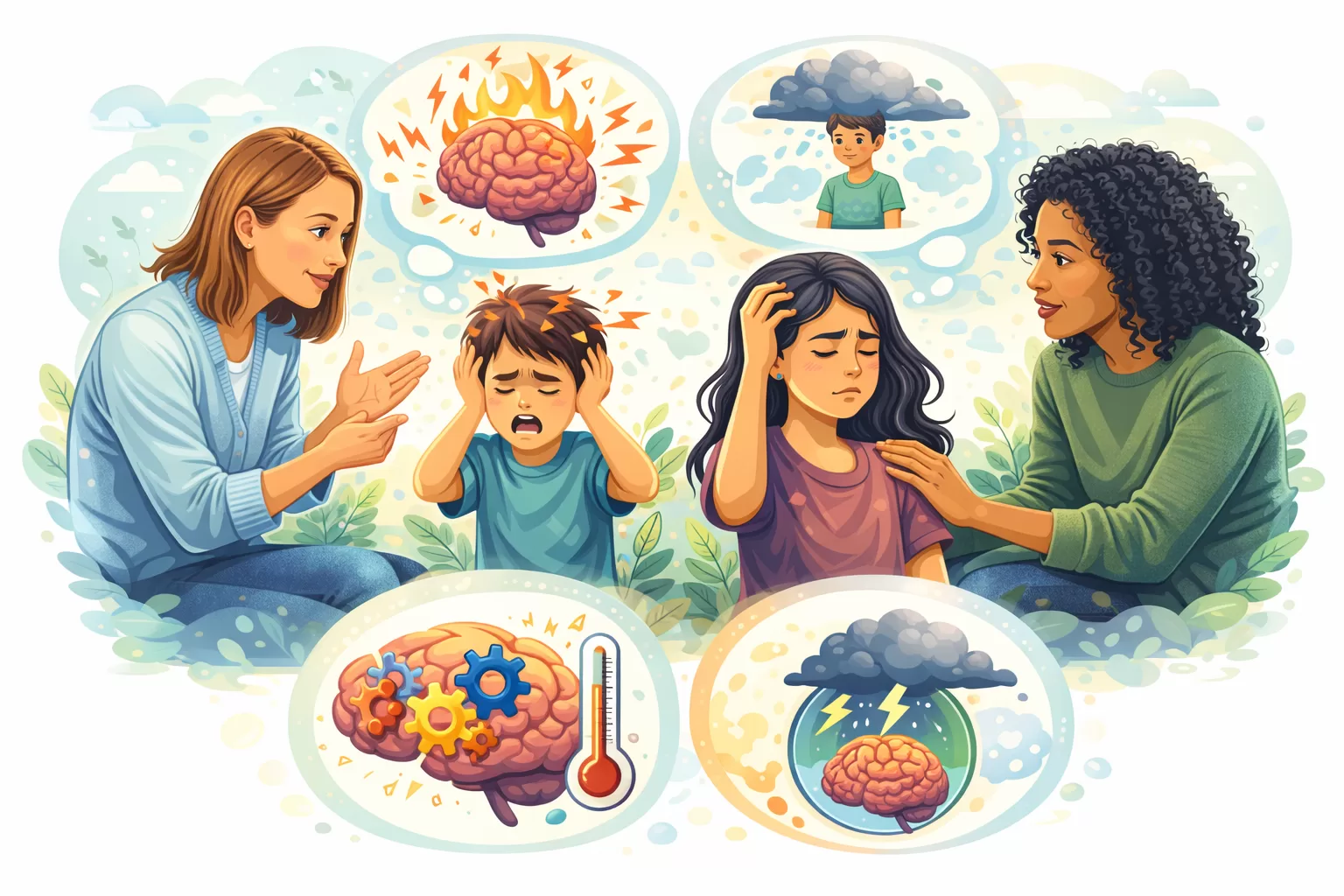








A guide for families navigating stress, emotional overwhelm, and autism in a way that feels clear and supportive
One of the most challenging parts of supporting a child or teen through stress is knowing how to talk about it. Many parents recognize that something is off, but struggle to find the right words to explain what their child is experiencing without making it feel bigger, scarier, or more confusing.
Children often feel things before they understand them. Teens may have more awareness, but still lack the language to make sense of their internal experience. Without a way to understand what is happening, stress can feel unpredictable and overwhelming.
Helping a child understand stress does not require complex explanations. What it requires is clarity, consistency, and language that meets them where they are.
What Stress Actually Is
At its core, stress is the body’s response to something that feels demanding or overwhelming. This response is not a problem. It is something the body is designed to do.
When a child perceives something as challenging, their system becomes more alert. Their heart rate may increase, their thoughts may speed up, and their body may feel tense. This is the body preparing to respond.
For children and teens, the challenge is not the presence of stress. It is understanding what is happening and learning how to respond to it.
When stress is not understood, it can feel like something is wrong. When it is explained clearly, it becomes something that can be managed.
How to Explain Stress in a Way Children Understand
Children benefit from simple and concrete language. Abstract explanations can feel confusing or inaccessible, especially for younger children or those who process information differently.
Instead of using clinical terms, it can be helpful to describe stress as something their body does to try to help them.
For example, you might explain that the brain has a “helper system” that turns on when something feels hard or important. This system can make their body feel faster or more tense, even if they are not in danger.
For teens, the explanation can be slightly more detailed, but still grounded in relatable language. You might talk about how stress affects focus, motivation, and emotions, and how it can make even simple tasks feel more difficult.
The goal is not to give a perfect explanation. It is to help your child feel less confused by what they are experiencing.
Helping Children Recognize Stress in Their Body
One of the most important skills a child can develop is the ability to notice when stress is building.
Many children experience stress physically before they recognize it emotionally. They may feel tension in their body, discomfort in their stomach, or changes in their energy level.
Helping children identify these signals can give them an early indication that they need support or a break.
You might start by gently pointing out what you observe. For example, noticing that their body seems tense or that they are breathing more quickly during a challenging moment.
Over time, children can begin to make these connections on their own. This awareness becomes the foundation for learning how to manage stress more effectively.
Explaining Stress to Children with Autism
For children on the autism spectrum, stress may be experienced and expressed differently. Sensory input, changes in routine, and social expectations can all contribute to increased stress.
When explaining stress to a child with autism, it is often helpful to be even more concrete and structured.
Visual supports can be especially effective. Using simple charts, drawings, or scales to represent different levels of stress can make the concept more tangible. For example, a scale from calm to overwhelmed can help a child identify where they are at any given moment.
It is also important to connect stress to specific experiences. Instead of speaking in general terms, linking stress to situations the child has encountered can make the explanation more meaningful.
For example, explaining that feeling overwhelmed in a noisy room is a type of stress response can help the child better understand their reaction.
What to Say When Your Child Is Overwhelmed
In moments of high stress, children are not always able to process complex language. What they need most in those moments is calm and clarity.
Rather than asking many questions or trying to solve the problem immediately, it can be helpful to keep communication simple and supportive.
You might focus on helping them regulate first, then return to the conversation later.
Some examples of supportive responses include:
- Noticing what you see in a calm and neutral way
- Offering reassurance without minimizing the experience
- Giving space if your child is not ready to talk
- Returning to the conversation once they are more settled
The way you respond in these moments can shape how safe your child feels expressing their emotions in the future.
Teaching Children That Stress Is Manageable
One of the most important messages children can learn is that stress is something they can handle.
This does not mean that stress will go away quickly or easily. It means that they can learn ways to move through it.
This message is built over time through experience. When children are supported through stressful moments without being overwhelmed or dismissed, they begin to develop confidence in their ability to cope.
It is also important to model this understanding. When caregivers approach stress in a calm and manageable way, children begin to internalize that approach.
Creating Ongoing Conversations About Stress
Talking about stress should not be limited to moments of crisis. Ongoing, low-pressure conversations can help normalize the experience and make it easier for children to share when they are struggling.
This might include checking in about their day, reflecting on challenges they have faced, or discussing how they handled a difficult situation.
These conversations do not need to be long or formal. What matters is consistency.
Over time, this creates an environment where stress is not something that has to be hidden or avoided, but something that can be talked about and understood.
When Explanations Are Not Enough
There are times when understanding stress does not fully resolve it. Even when children can identify what they are feeling, they may still struggle to manage it on their own.
If stress is ongoing, intense, or interfering with daily life, additional support may be helpful.
Therapy can provide a space for children and teens to explore their experiences more deeply, develop coping strategies, and build emotional awareness in a structured and supportive environment.
It can also help families feel more confident in how they are supporting their child.
Supporting Both Understanding and Connection
Helping a child understand stress is not just about providing information. It is about creating a sense of safety around their experience.
When children feel that their emotions are understood and taken seriously, they are more likely to engage in the process of learning how to manage them.
This balance between understanding and connection is what allows children to move from confusion to clarity.
You Do Not Have to Navigate This Alone
At Trust Therapeutics, we support children, teens, and families in making sense of emotional experiences like stress in a way that feels clear, manageable, and grounded.
Our clinicians use evidence-based approaches, including Cognitive Behavioral Therapy, Acceptance and Commitment Therapy, and developmentally informed interventions, to help children build awareness, strengthen coping skills, and feel more confident in navigating challenges.
We also work closely with families, recognizing that support does not happen in isolation. When caregivers feel supported, children benefit as well.
If your child is struggling to understand or manage stress, therapy can provide a space for both clarity and growth.
Trust Therapeutics is here to help your family move toward a place that feels more stable, more connected, and more supported.