
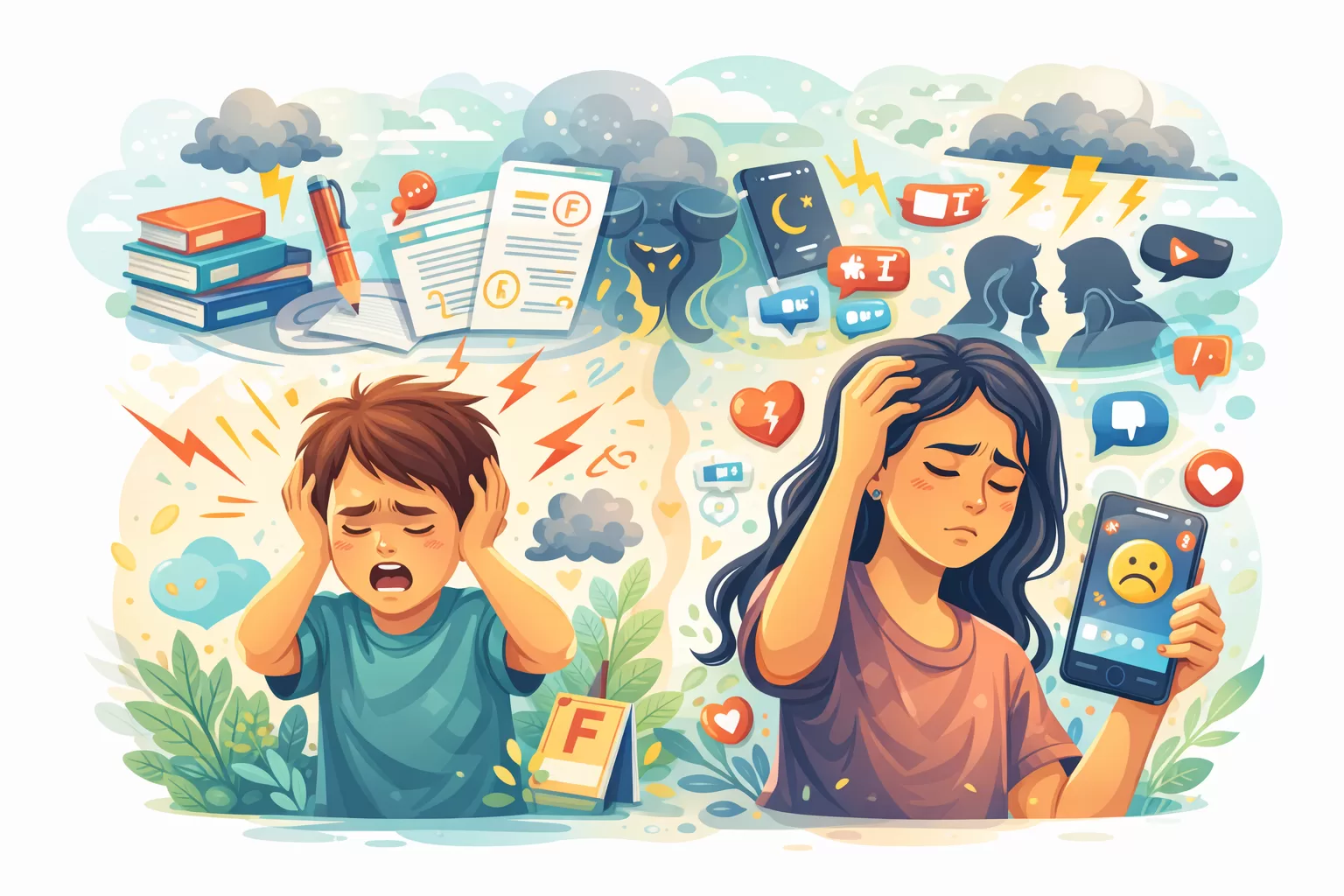








Signs, symptoms, and when to seek help
Stress is often thought of as something adults deal with. Work deadlines, financial responsibilities, and life pressures tend to take center stage when we think about stress. But children and teens experience stress just as deeply, even if it looks different on the surface.
For many families, the hardest part is not whether stress is present. It is recognizing it.
Children and teens do not always have the language to explain what they are feeling. Instead of saying “I feel overwhelmed,” a child might become irritable, withdrawn, or suddenly resistant to things that once felt easy. A teen might appear unmotivated or distant, when in reality they are carrying more internal pressure than they know how to express.
Understanding how stress shows up across different developmental stages can help caregivers respond with clarity instead of confusion. It can also create space for earlier support, which can make a meaningful difference in a child’s emotional well-being.
What Stress Looks Like in Children and Teens
Stress does not always look like worry or anxiety. In younger children, it often shows up through behavior. In teens, it can be more internal, but still expressed in ways that are easy to misinterpret.
Children may not connect their emotions to external stressors. Instead, their bodies and behaviors do the talking.
A child who is overwhelmed might become more clingy, have frequent meltdowns, or struggle with transitions. You might notice changes in sleep, increased sensitivity, or a lower tolerance for frustration. These are not simply behavioral issues. They are often signals that something feels too big to manage internally.
Teens, on the other hand, may show stress in ways that resemble withdrawal or indifference. A teen who once engaged with school or family life might begin to pull back. They may spend more time alone, seem less motivated, or react more strongly to small frustrations.
It is important to recognize that stress in teens is not always loud. Sometimes it looks like silence.
Common Signs of Stress
While every child is different, there are patterns that tend to emerge when stress is present. Paying attention to shifts rather than isolated behaviors is key.
You may begin to notice changes in emotional regulation. A child who was once easygoing might become more reactive. A teen might seem constantly on edge or easily overwhelmed.
Physical symptoms are also common. Headaches, stomachaches, fatigue, or changes in appetite can all be connected to stress. These symptoms are real and should not be dismissed as “just in their head.”
There may also be changes in functioning. This can include difficulty concentrating, declining academic performance, or avoiding activities they once enjoyed.
Here are a few signs that may indicate stress is building:
- Increased irritability or emotional outbursts
- Withdrawal from family or friends
- Changes in sleep or appetite
- Complaints of physical discomfort without a clear medical cause
- Difficulty focusing or completing tasks
- Avoidance of school or activities
- Increased sensitivity to criticism or perceived failure
It is not about checking off every item on a list. It is about noticing patterns and trusting that changes in behavior often reflect changes in internal experience.
Why Stress Develops
Stress in children and teens does not come from a single source. It is usually a combination of internal and external factors.
Academic pressure is one of the most common contributors. Expectations around performance, whether self-imposed or external, can create a sense of constant pressure. For some children, this pressure is quiet but persistent. For others, it becomes overwhelming.
Social dynamics also play a significant role. Friendships, peer acceptance, and social comparison can deeply impact how a child or teen feels about themselves. Even small shifts in peer relationships can feel significant.
Family dynamics matter as well. Changes in the household, increased tension, or even subtle emotional shifts can affect how safe and stable a child feels.
For some children, stress is also connected to temperament. Children who are more sensitive, perfectionistic, or prone to overthinking may experience stress more intensely.
It is important to understand that stress is not a sign of weakness. It is often a sign that a child is trying to adapt to something that feels bigger than their current capacity to manage.
When Stress Becomes Something More
Not all stress requires intervention. Some stress is a normal part of development. It helps children build resilience and learn how to cope with challenges.
The concern arises when stress becomes chronic, overwhelming, or begins to interfere with daily functioning.
If a child is consistently struggling to regulate emotions, disengaging from important areas of life, or experiencing ongoing physical symptoms, it may be time to look more closely.
One of the clearest indicators is duration. If stress-related behaviors or symptoms persist over time without improvement, it suggests that the child may need additional support.
Another important factor is intensity. Occasional frustration or withdrawal is expected. But when reactions feel disproportionate or difficult to recover from, it may signal that the child is overwhelmed.
Parents often have an intuitive sense when something feels different. Trusting that instinct can be an important first step.
How to Support a Child Experiencing Stress
Supporting a child or teen through stress does not require having all the answers. It begins with creating a space where they feel safe enough to express what they are experiencing.
One of the most important things a caregiver can offer is presence. Not fixing, not solving, but being available.
Children often need help putting words to their experience. Instead of asking direct questions that may feel overwhelming, it can be helpful to make gentle observations. For example, noticing changes in mood or behavior and naming them in a non-judgmental way.
Consistency also plays a key role. Predictable routines and emotional stability can help regulate a child’s internal world, especially when things feel uncertain.
Here are a few ways to support without overwhelming:
- Create regular moments of connection without pressure to talk
- Validate emotions even if the behavior needs to be redirected
- Model healthy coping strategies
- Encourage balance between responsibilities and rest
- Reduce unnecessary pressure where possible
Support is not about removing all stress. It is about helping a child feel capable of moving through it.
When to Seek Professional Support
There are times when stress moves beyond what can be supported at home. Seeking professional help does not mean something is wrong with your child. It means you are creating additional support where it is needed.
If stress is significantly impacting your child’s mood, behavior, relationships, or functioning, therapy can provide a structured space to explore and understand what is happening.
A therapist can help children and teens develop emotional awareness, build coping skills, and process experiences in a way that feels manageable.
For families, therapy can also offer guidance on how to respond effectively and support their child without escalating stress.
Creating Space for Emotional Understanding
Stress is not always visible, but it is always meaningful.
When a child becomes more irritable, withdrawn, or resistant, it is easy to focus on the behavior. But beneath that behavior is often an experience that has not yet been understood or expressed.
Shifting the focus from “what is wrong” to “what might be happening underneath” can change the way we respond.
Children and teens do not need perfect environments. They need environments where their experiences are noticed, taken seriously, and responded to with care.
You Do Not Have to Navigate This Alone
If your child or teen is showing signs of stress, support is available.
At Trust Therapeutics, we work with children, teens, and families to better understand emotional experiences and build tools that feel realistic and sustainable. Therapy can offer a space for your child to feel heard, and for your family to feel more supported in navigating these challenges together.
Reaching out can be the first step toward helping your child feel more grounded, more understood, and more capable of managing what they are going through.