
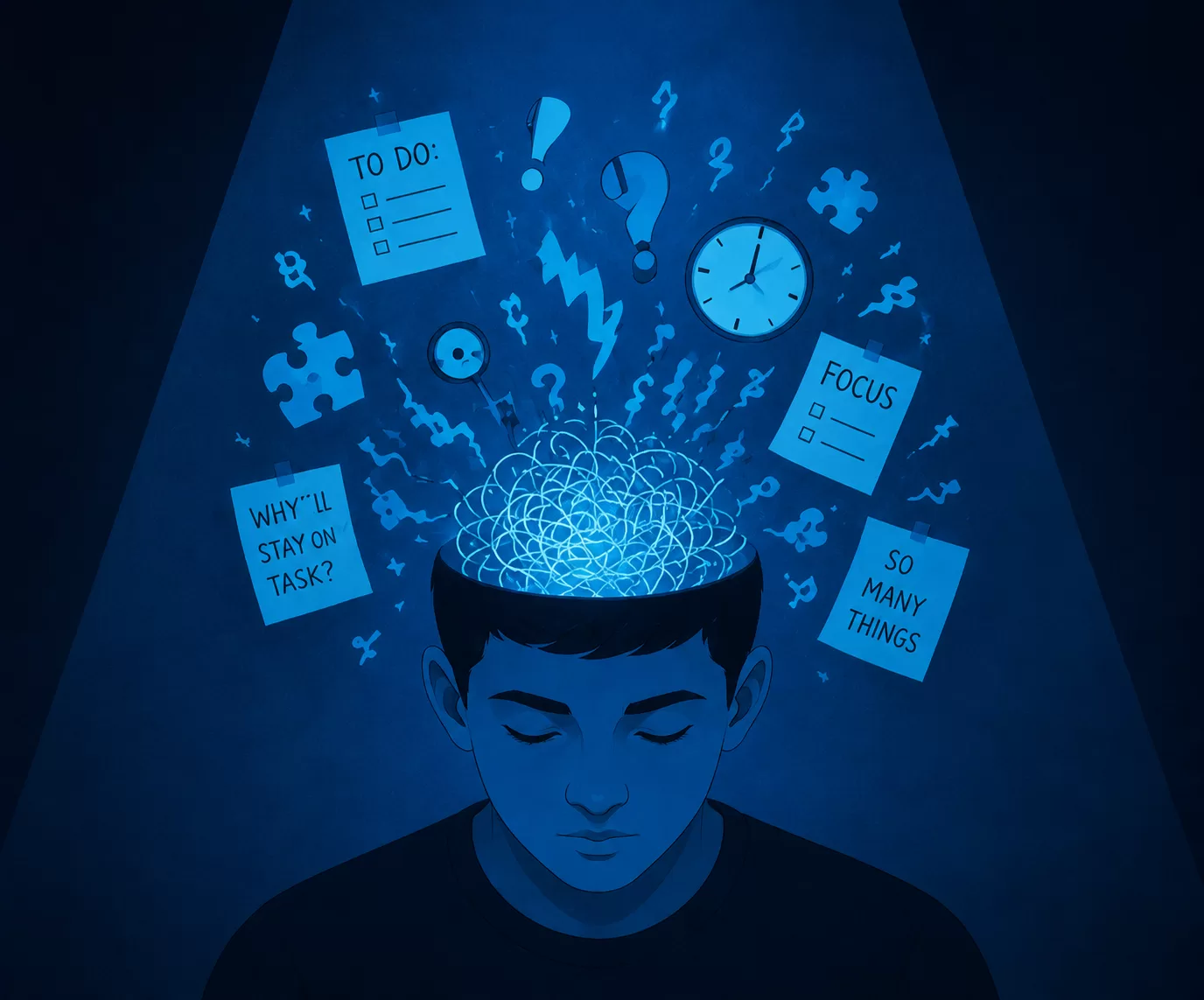








It can feel confusing when simple tasks feel difficult.
You may be looking at something that should take a few minutes, and instead of starting, you feel stuck. The task itself is not complicated. You understand what needs to be done. There is no real barrier from the outside, and yet getting started feels harder than it should.
This experience is common in ADHD.
It is often described as task paralysis, and it has very little to do with laziness or lack of effort. In fact, many people with ADHD spend a significant amount of energy thinking about what they need to do. The difficulty is not in knowing, it is in starting.
Understanding why this happens can change how you approach it.
The Gap Between Knowing and Doing
One of the most frustrating parts of ADHD is the gap between intention and action.
You may have a clear plan for what you need to do. You may even feel motivated at times. But when it comes time to begin, something does not connect. The starting point feels inaccessible, even when the steps are obvious.
This disconnect can feel personal.
It may lead you to believe that you are not trying hard enough or that you lack discipline. Over time, this can affect how you see yourself and how you approach tasks.
In reality, this gap is related to how the brain manages executive function.
What Task Paralysis Actually Is
Task paralysis is not avoidance in the way people often think.
It is not a conscious decision to delay or ignore something. Instead, it is a difficulty accessing the mental process that allows you to begin. The task may feel too large, too unclear, or too demanding, even if it appears simple from the outside.
This creates a kind of mental freeze.
You may find yourself sitting with the intention to start, but shifting to something else instead. This shift is often automatic. The brain moves toward something that feels easier to engage with, even if it is not what you intended to do.
This can create frustration.
The more it happens, the more pressure builds around the task.
Why “Simple” Tasks Can Feel Overwhelming
Tasks that seem simple often involve multiple hidden steps.
For example, sending an email might require deciding what to say, organizing your thoughts, opening your inbox, and responding clearly. Each of these steps requires a small amount of effort, and together they can feel overwhelming.
This is especially true when executive function is involved.
Your brain is trying to manage multiple processes at once, which increases the mental load. Even if the task itself is short, the process of getting there can feel heavy.
Because of this, the difficulty is not always visible.
It is happening internally.
The Role of Motivation and Dopamine
Motivation in ADHD is not consistent.
It is often tied to interest, urgency, or reward. When a task does not provide one of these elements, it can be harder for the brain to engage. This does not mean the task is unimportant. It means the brain is not receiving the signals it needs to initiate action easily.
This is where dopamine plays a role.
Dopamine helps regulate motivation and reward. When levels are low or inconsistent, tasks that do not provide immediate feedback can feel harder to start. This is why deadlines can create sudden bursts of productivity. The urgency increases stimulation, making it easier to engage.
While this can work in the short term, it often leads to stress.
The Impact of Overwhelm
Overwhelm is closely connected to task paralysis.
When a task feels unclear or too large, it becomes harder to approach. Even if you intend to break it down, the starting point may still feel out of reach. This creates hesitation, which then leads to delay.
Over time, this pattern reinforces itself.
The more a task is delayed, the more pressure builds around it. This increased pressure makes it even harder to start, creating a cycle that is difficult to interrupt.
Common Experiences with Task Paralysis
Many adults with ADHD recognize these patterns, even if they describe them differently.
Some of the most common experiences include:
- Sitting down to start something and doing something else instead
- Feeling mentally blocked when trying to begin a task
- Waiting until the last minute to create urgency
- Starting multiple small tasks instead of the main one
- Feeling overwhelmed by tasks that seem simple to others
These experiences are not about lack of effort.
They reflect how the brain is responding to the task.
How to Make Tasks Easier to Start
The most effective way to reduce task paralysis is to lower the barrier to starting.
This means making the task feel smaller, clearer, and more accessible. Instead of focusing on completing something, focus on beginning it in a manageable way.
Small adjustments can make a significant difference.
Some helpful approaches include:
- Breaking tasks into the smallest possible steps
- Starting with just a few minutes instead of committing to the whole task
- Removing decisions by planning the first step in advance
- Using visual cues or reminders to reduce mental load
- Pairing tasks with something familiar or routine
These strategies work because they reduce the amount of effort required to begin.
Why Starting Is More Important Than Finishing
Starting creates momentum.
Once you begin, the task becomes more concrete. This reduces uncertainty and makes it easier to continue. The goal is not to complete everything at once. It is to create movement.
This shift in focus can reduce pressure.
Instead of expecting yourself to finish, you allow yourself to begin. Over time, this builds consistency.
Changing the Way You Think About Tasks
The way you think about a task affects how you approach it.
If a task feels large or overwhelming, your brain may resist engaging with it. Changing how you frame the task can make it feel more manageable.
For example, instead of thinking “I need to finish this,” you might think “I need to start the first step.”
This reduces the mental weight.
It also creates a clearer path forward.
How Therapy Helps with Task Paralysis
Therapy can help you understand the patterns behind task paralysis and develop strategies that work for your brain.
At Trust Therapeutics, this includes identifying how executive dysfunction, motivation, and overwhelm are interacting in your daily life. Once these patterns are clear, it becomes easier to adjust how you approach tasks.
Cognitive Behavioral Therapy can help shift thoughts that contribute to feeling stuck, such as believing that you should be able to start easily. Acceptance and Commitment Therapy can help you take action even when it feels difficult, by focusing on small, meaningful steps.
There is also a focus on practical support.
This includes creating systems for managing tasks, building routines that feel realistic, and reducing the mental load that makes tasks feel heavier.
You Are Not Lazy
It is important to say this clearly.
Struggling to start tasks is not a reflection of your character. It is a reflection of how your brain is processing effort, attention, and motivation.
Understanding this can reduce self-criticism.
It also makes it easier to try new approaches.
You Can Build Momentum Over Time
Task paralysis does not have to stay the same.
With the right strategies, it becomes easier to start, continue, and complete tasks. This does not happen all at once, but it builds over time.
Small steps lead to consistent change.
You Do Not Have to Figure This Out Alone
At Trust Therapeutics, we work with adults who are navigating ADHD and struggling with task initiation, focus, and daily functioning. We focus on helping you understand your patterns and build strategies that make tasks more manageable.
If simple tasks feel harder than they should, support can help you find a way forward that feels more natural and less frustrating.
You do not have to keep pushing through on your own.