
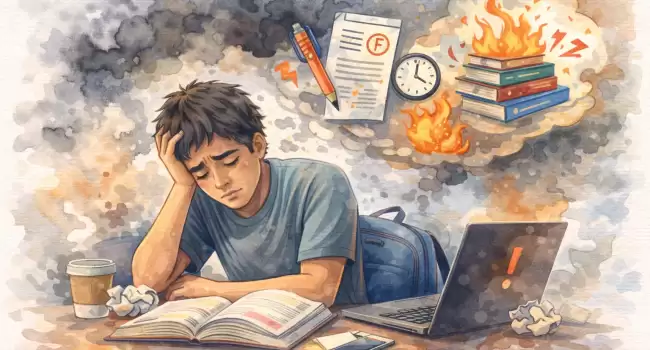
There’s a point where ordinary academic stress shifts into something more persistent — where exhaustion, detachment, and declining performance stop being tied to a specific busy week and start becoming the default state. Recognizing that shift matters, because burnout typically needs more than a weekend to recover from.
How Burnout Differs From a Busy Week
Ordinary stress rises around deadlines and falls afterward. Burnout persists regardless of whether a specific deadline has passed, and tends to include a growing sense of detachment from coursework that wasn’t there before.
Signs Burnout Is Taking Over
Chronic exhaustion that doesn’t improve with a weekend or short break.
Declining academic performance despite consistent or increased effort.
Cynicism or detachment from subjects you used to care about.
Withdrawing from friends, activities, or routines that used to matter.
Why It Can Be Hard to Notice From the Inside
When exhaustion becomes the baseline, it can start to feel normal rather than like a warning sign — which is part of why burnout often isn’t addressed until it’s fairly advanced.
First Steps Toward Recovery
Recovery usually starts with reducing load somewhere — dropping a nonessential commitment, talking to a professor about deadline flexibility, or reprioritizing what actually needs your full effort this semester.
Rebuilding Sustainable Habits
Beyond the immediate reduction in load, longer-term recovery involves rebuilding a more sustainable relationship with rest, deadlines, and expectations — not just pushing through until the next break.
When to Seek Support
If burnout is significantly affecting your ability to function — attending class, maintaining relationships, completing basic tasks — campus counseling or outside therapy is a reasonable next step.
Get support if burnout is starting to take over your semester.