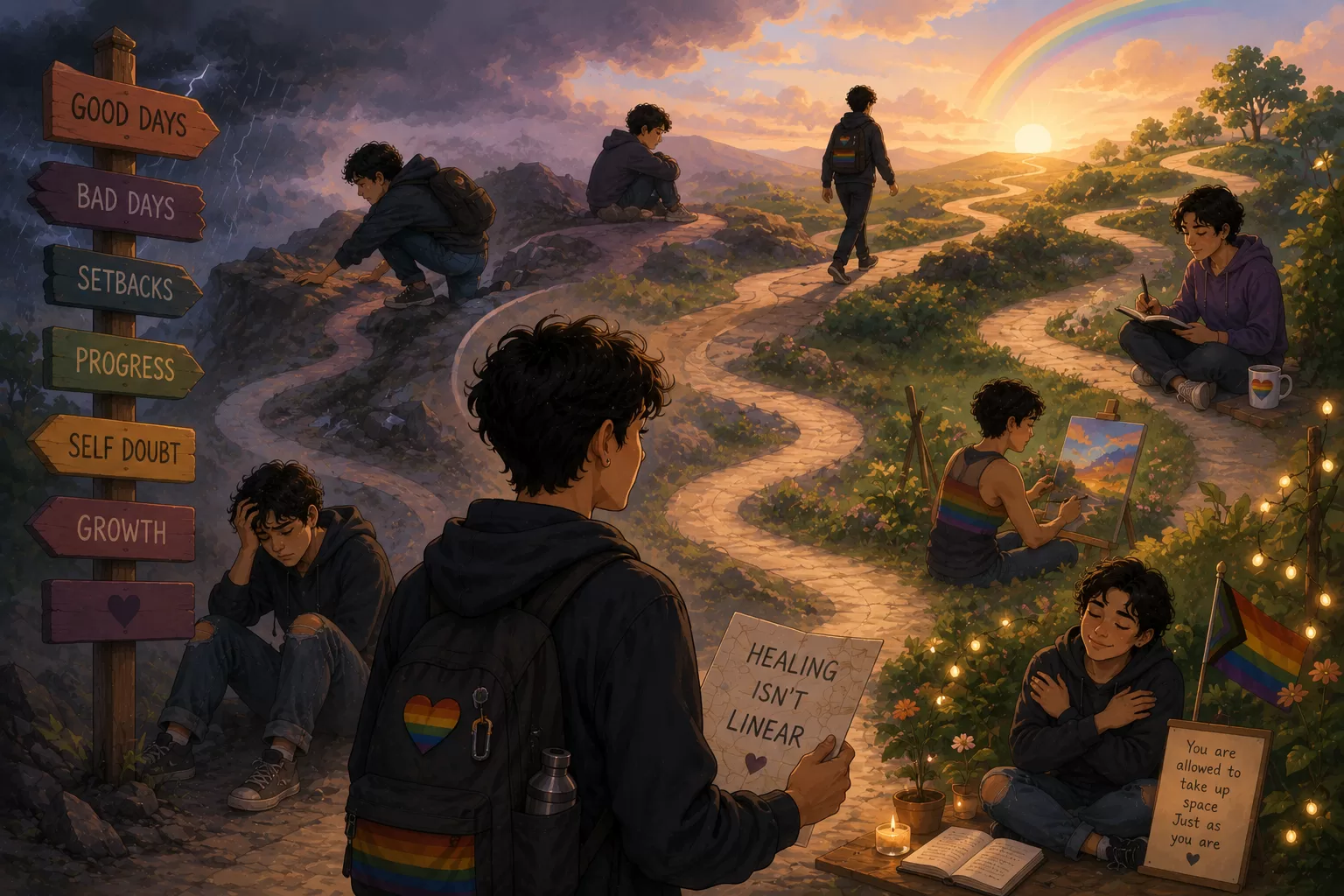

Being the person others rely on can feel meaningful — and exhausting, if it never leaves room for your own needs. Strength itself isn’t the problem. Isolation, suppression, and carrying more responsibility than is sustainable, quietly and for a long time, tend to be what actually causes harm.
Many people in this position don’t recognize the cost until it’s significant, because the role feels like an identity rather than a pattern that can be adjusted — which makes it worth examining more closely.
Where the Pressure to Stay Strong Can Come From
This pressure can come from many directions — family roles that assign you the “strong one” position, cultural expectations, gender norms, leadership responsibilities, caregiving duties, or past experiences that taught you needing help wasn’t safe or welcome. These sources often overlap, and no single explanation applies to everyone who feels this pressure.
Resilience Versus Emotional Suppression
Genuine resilience includes the ability to acknowledge difficulty and ask for support when needed. Emotional suppression looks similar from the outside — steady, capable, unshaken — but comes at the cost of never showing need at all.
The difference matters because suppression tends to accumulate strain rather than resolve it. Feelings that aren’t processed don’t disappear; they tend to surface later, often in ways that are harder to trace back to their source.
Signs the Role Is Becoming Costly
Warning signs can include feeling resentful or depleted without being able to say why, difficulty accepting help even when it’s offered, a sense of being fundamentally alone even while surrounded by people who rely on you, or physical tension and fatigue that doesn’t have an obvious cause.
How the Pattern Affects Relationships and Well-Being
Always being the strong one can create a one-sided dynamic in relationships, where others rarely get the chance to support you in return. Over time, this can contribute to emotional exhaustion, disconnection, and a harder time recognizing your own needs at all.
Ways to Ask for Support Without Abandoning Responsibility
Asking for support doesn’t mean giving up the role you play for others — it means adding room for your own needs alongside it. That can look like naming a specific need directly (“I’m having a hard time and could use someone to just listen”), setting a boundary around one responsibility, or simply telling someone close to you that you don’t have it all figured out right now.
How Therapy Can Help
A therapist can offer a space where you don’t have to be the strong one — where the goal is understanding what this pattern has cost you and building a way to ask for support without framing vulnerability as a weakness.
Talk with a therapist if being the strong one has left no room for your own needs.