
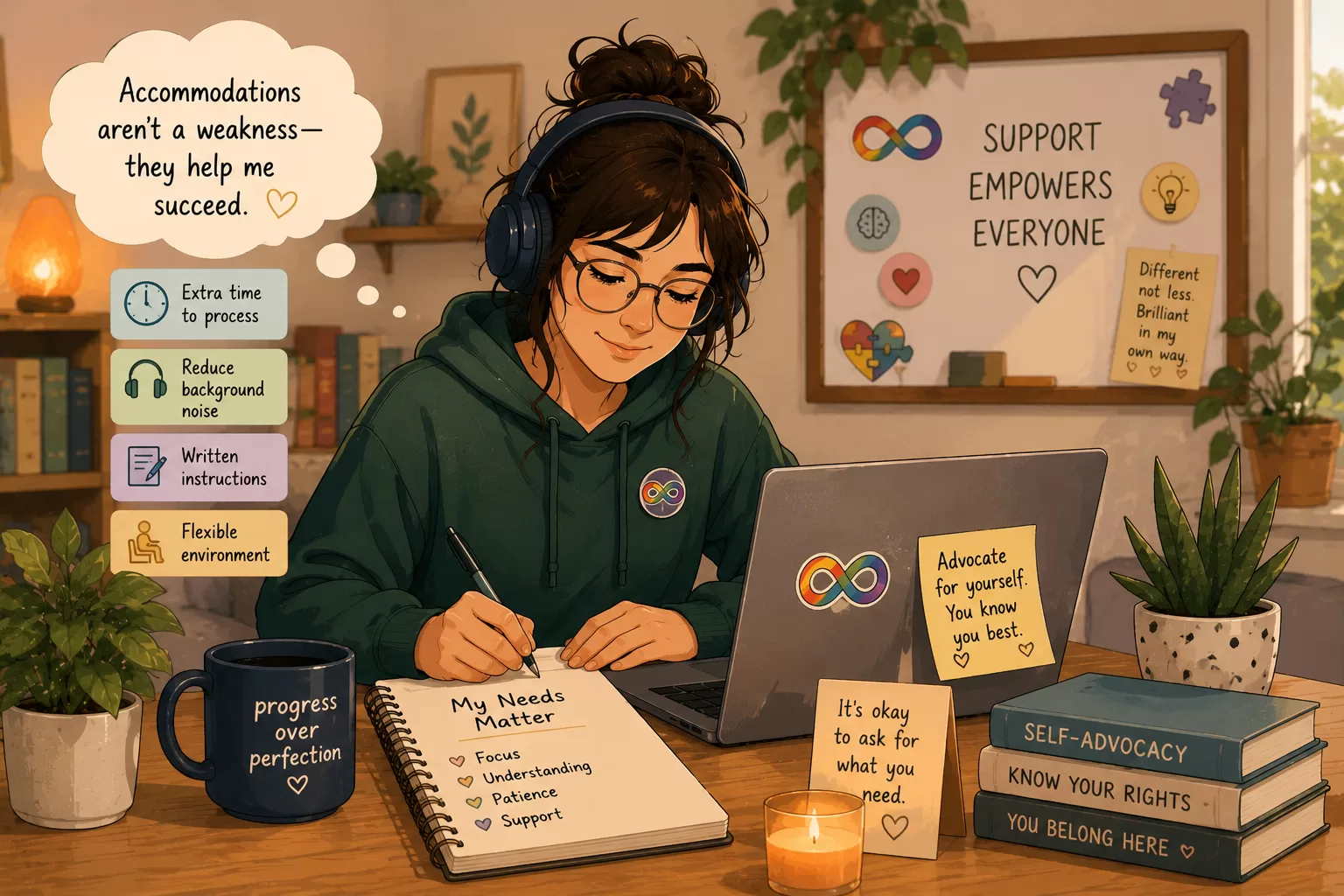








What Accommodations Really Mean
Seeking accommodations is not about gaining an unfair advantage. It is about accessing an environment that allows you to function as effectively as possible. Accommodations are adjustments that reduce barriers — not barriers to challenge, but barriers that are the result of environments not being designed with neurodivergent needs in mind.
Why Asking for Accommodations Can Feel Difficult
There are many reasons why asking for accommodations can feel uncomfortable. There may be concerns about how you will be perceived, worry about whether your needs are “serious enough,” or a history of having needs minimized or dismissed. These concerns are valid. And they do not mean that accommodations are not appropriate or necessary.
What Self-Advocacy Can Look Like
Self-advocacy does not require a formal diagnosis in every context, though in some settings it may be necessary for official accommodations. Self-advocacy can be as simple as communicating what helps you work or learn most effectively, or asking for clarity when instructions are unclear.
Accommodations in Academic and Workplace Settings
In academic settings, accommodations might include extended time, quiet testing environments, or flexible deadlines. In workplace settings, they might include written instructions rather than verbal-only, clear communication about expectations, or schedule adjustments. In both contexts, the purpose is the same — creating conditions where you can contribute and function effectively.
How Therapy Can Support Self-Advocacy
At Trust Therapeutics, therapy can help you understand your needs more clearly, develop the language to communicate them, and build confidence in advocating for yourself. Asking for support is not a weakness. It is a sign that you understand what you need and are willing to take steps to access it.