
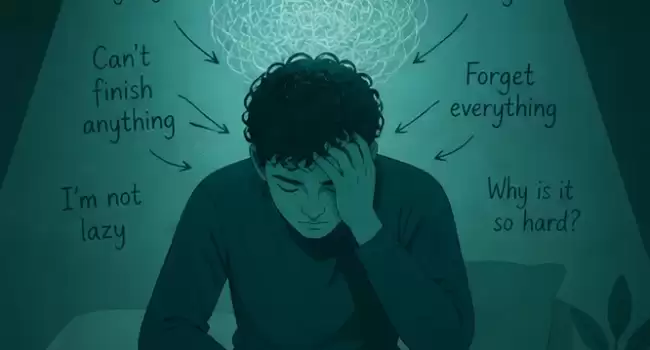
Low motivation is a signal, not proof of laziness or weak discipline. If you have clear goals but still can’t seem to make yourself start, the problem usually isn’t your character — it’s that something is getting in the way of the connection between wanting something and being able to act on it. Understanding what’s actually happening is more useful than trying to white-knuckle your way through it.
It’s worth separating two different experiences that often get lumped together: not wanting to do something, and wanting to but being unable to start. They can look identical from the outside, but they usually call for different responses.
Why Goals Are Not Always Enough to Create Motivation
Having a clear goal doesn’t automatically generate the energy or drive needed to pursue it day to day. Motivation depends on a mix of factors — mood, energy, how rewarding a task feels in the moment, and how much friction stands between you and getting started. A goal can be completely genuine and still fail to translate into motivation if any of these pieces are missing.
Common Reasons Motivation Drops
A drop in motivation can stem from burnout, depression, anxiety, ADHD, poor sleep, medication side effects, substance use, or physical health issues — sometimes one of these, often more than one at a time.
None of these are things to self-diagnose from a list, and none of them mean you’re simply not trying hard enough. The point of naming them is to shift the question from “what’s wrong with my willpower” to “what’s actually getting in the way.”
The Difference Between Low Motivation and Task-Initiation Difficulty
“I don’t want to” and “I want to but I can’t seem to start” are different experiences, even though they can look the same from the outside. The first often points to something about the task itself — it doesn’t feel meaningful, or the goal doesn’t feel like yours. The second points more toward initiation difficulty, which can be tied to executive functioning, mood, or overload rather than a lack of desire.
Small Steps That Reduce Activation Energy
Rather than relying on a burst of motivation to get started, it often helps to shrink the first step until it feels almost too easy — opening the document instead of writing the report, putting on shoes instead of committing to the whole workout.
This works because the hardest part of most tasks is the transition into starting, not the task itself. Once that threshold is crossed, momentum tends to carry more of the work than willpower does.
When to Talk With a Doctor or Therapist
If low motivation is persistent, affecting multiple areas of your life, or paired with changes in sleep, mood, or energy, that’s worth bringing to a doctor or therapist rather than continuing to manage it alone. A professional can help sort out whether something like depression, ADHD, or a medical factor is playing a role.
How Therapy Can Address the Pattern
A therapist can help you understand what’s actually driving the drop in motivation, rule out or address underlying causes, and build practical strategies — including small-step approaches — tailored to how your particular pattern shows up.
Get support identifying what is blocking motivation and what to try next.