








The Question Behind the Question
Choosing a therapist can feel overwhelming, especially if you have never been to therapy before. For many people, one question stands out above all the others: Will this therapist understand me? That question is about much more than finding someone who shares your background. It reflects a desire to feel heard, respected, and accepted without having to explain or defend every part of your identity. This is where culturally responsive therapy becomes so important.
What Culturally Responsive Therapy Actually Means
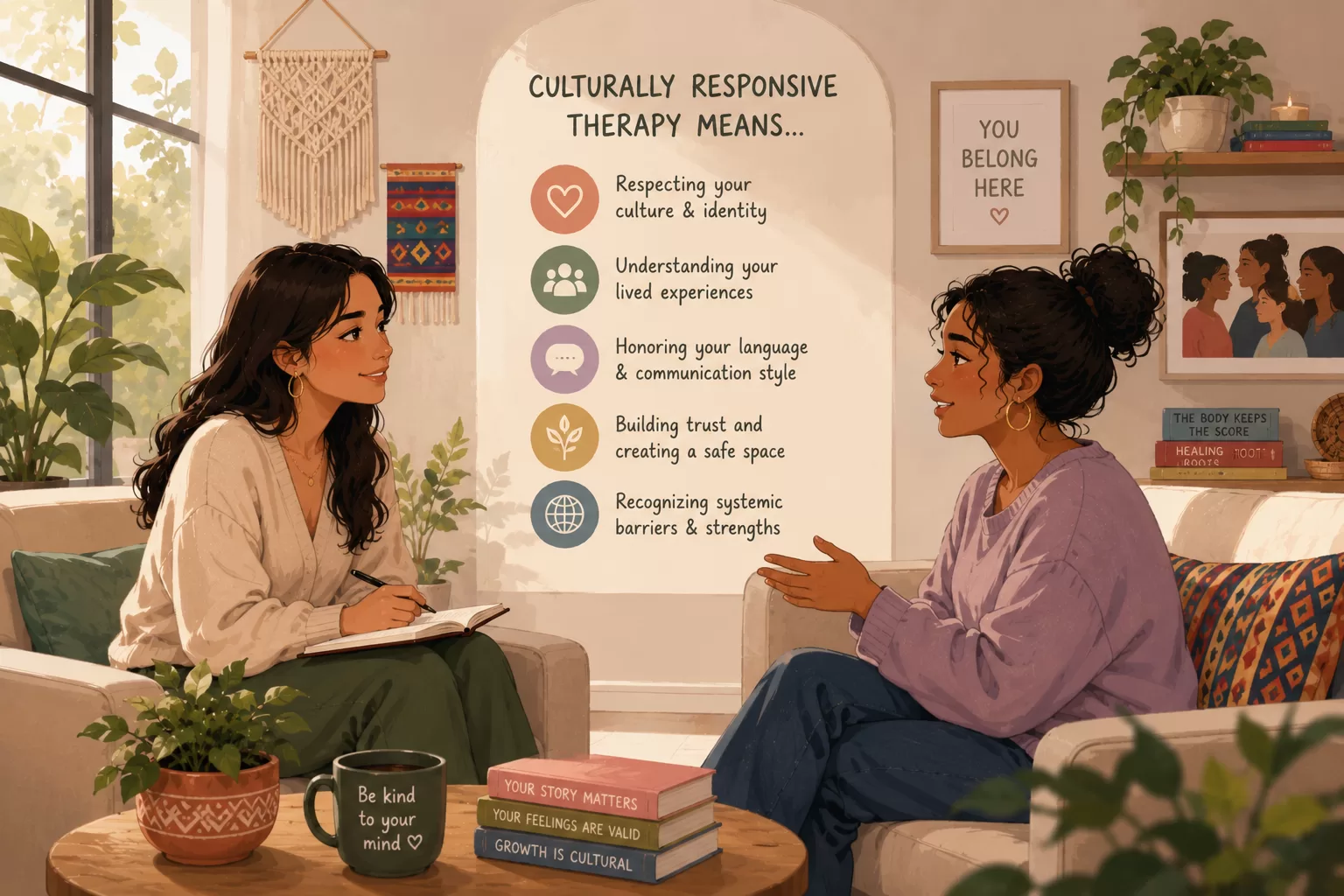
Culturally responsive therapy recognizes that no two people experience life in exactly the same way. Rather than assuming every client should fit into the same treatment approach, culturally responsive therapists seek to understand the person’s unique background, values, and lived experiences. They recognize that culture is not something separate from mental health — it is part of the context that shapes it. One of the defining characteristics is humility. Instead of assuming they already know everything about a person’s experiences, therapists remain open to learning from each client.
What Culturally Responsive Care Includes
Culturally responsive therapy also recognizes that life experiences outside of an individual’s control can influence mental health. Experiences such as discrimination, migration, language barriers, community violence, financial stress, inaccessible environments, or historical inequities may contribute to emotional distress. A therapist does not need to have lived those exact experiences to acknowledge their impact. Disability inclusion is also an important component — individuals with physical disabilities, chronic illnesses, autism, ADHD, and other differences deserve mental health care that respects both their strengths and their individual needs.
Questions to Ask When Searching for a Therapist
- How do you approach working with clients from different cultural backgrounds?
- How do you incorporate a client’s values and identity into therapy?
- What experience do you have working with concerns similar to mine?
- How do you adapt your approach to meet each client’s individual needs?
How Therapy Can Help
At Trust Therapeutics, we believe every person deserves mental health care that is compassionate, inclusive, and tailored to their unique experiences. You should never feel like you have to leave important parts of yourself outside the therapy room. Seeking therapy is not about changing who you are — it is about understanding yourself more fully and building a future that reflects your values.