







When Biological Family Isn’t the Whole Story
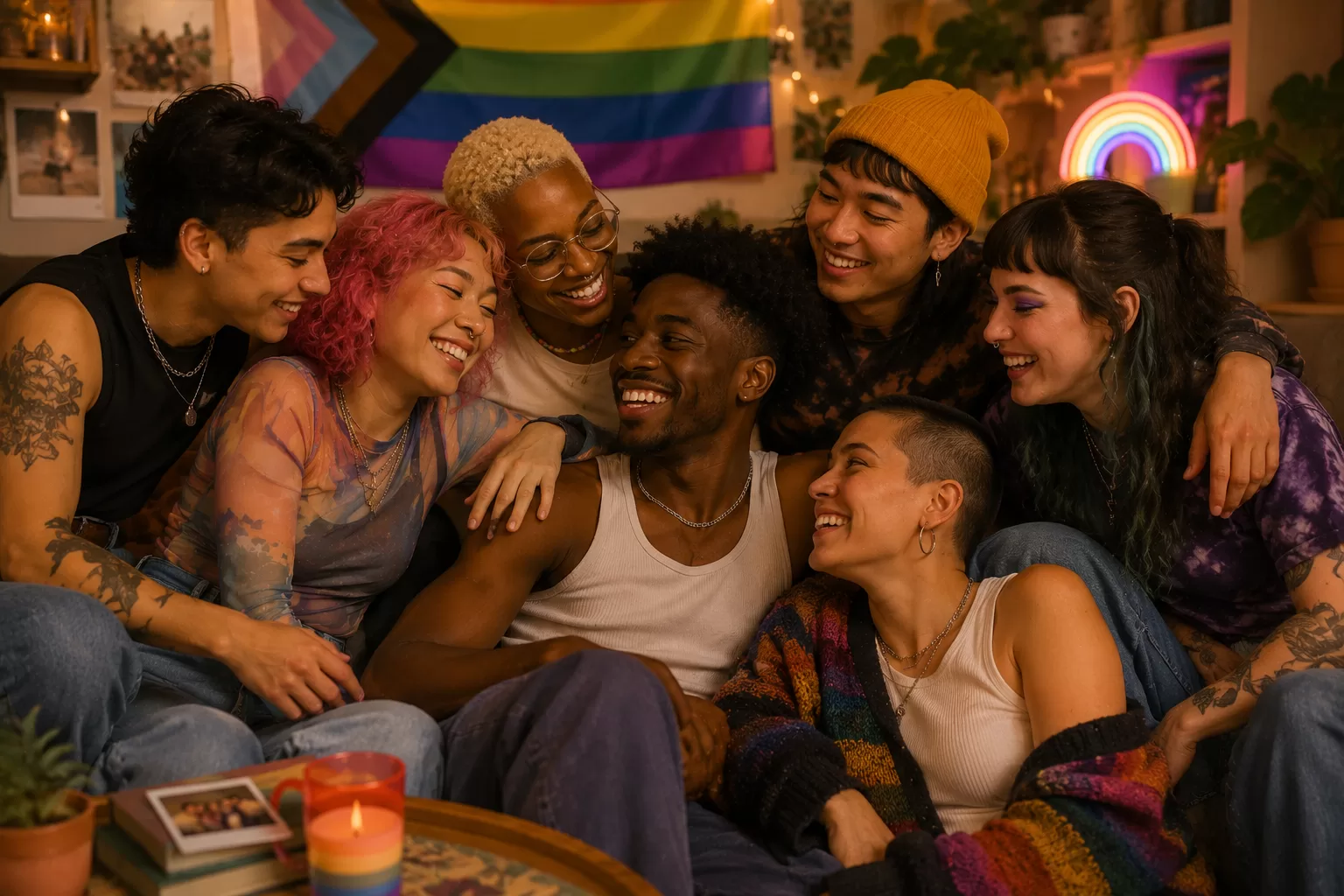
For many people, the concept of family is assumed to be straightforward — the people you are related to by blood or by legal bond. For a significant number of LGBTQ+ individuals, however, family is often something that needs to be built rather than simply inherited. Some individuals experience strained relationships with biological family members due to rejection or a lack of acceptance surrounding their identity. This is where chosen family often becomes essential — relationships individuals deliberately build with people who provide the support, acceptance, and belonging that may not always be available elsewhere.
Why Chosen Family Develops
Chosen family often emerges out of necessity, but it grows into something far more significant than a simple coping strategy. When biological family relationships involve rejection, conditional acceptance, or ongoing conflict related to identity, many individuals seek connection elsewhere. These relationships are not formed out of obligation. Many LGBTQ+ individuals describe chosen family as relationships where they do not have to explain or justify who they are — acceptance is simply present from the beginning.
The Mental Health Benefits of Chosen Family
Supportive relationships play a well-documented role in emotional well-being. Having people who affirm one’s identity can reduce feelings of isolation and provide a consistent source of validation during difficult periods. Chosen family can also buffer the impact of minority stress — when individuals have spaces where they feel fully seen, the cumulative weight of stigma and discrimination becomes more manageable.
Chosen Family Can Take Many Forms
There is no single definition of what chosen family looks like. For some, it includes close friends who have become as significant as biological siblings. For others, it includes mentors, community elders, or members of LGBTQ+ organizations. What unites these relationships is not a formal label, but the quality of care, consistency, and acceptance present within them.
When Biological and Chosen Family Coexist
It is important to note that chosen family does not always mean the absence of biological family relationships. Many individuals maintain connections with relatives while also building chosen family networks. Chosen family can exist alongside these relationships, providing additional support rather than replacing what already exists.
How Therapy Can Help
At Trust Therapeutics, therapy can provide a space to process experiences related to family relationships, whether biological, chosen, or both. For individuals navigating strained or absent biological family connections, therapy can help process grief and explore boundaries. Family, in whatever form it takes, plays a significant role in mental health and healing. Chosen family reminds many LGBTQ+ individuals that belonging is not something that must be earned through blood relation — it can be built, nurtured, and sustained through genuine connection and mutual care.