
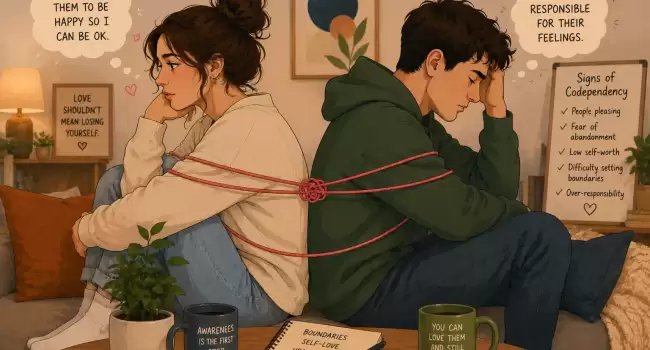
“Codependency” gets used loosely online, often to describe any close or interdependent relationship. The term actually refers to something more specific: a pattern where one’s sense of identity or wellbeing becomes excessively dependent on another person’s needs, moods, or approval.
Codependency Versus Healthy Interdependence
Healthy relationships involve genuine interdependence — caring about your partner’s wellbeing, being affected by their moods. Codependency goes further: your own sense of okay-ness becomes contingent on managing or fixing the other person.
Common Signs of Codependent Patterns
These can include difficulty setting boundaries, excessive responsibility for the other person’s feelings or problems, a fear of the relationship ending that overrides your own needs, or self-worth that fluctuates based on the other person’s approval.
Where Codependent Patterns Often Come From
These patterns often develop in response to earlier relationships — a family system where love felt conditional on caretaking, for example — rather than reflecting a personal flaw in the person experiencing them.
How Codependency Affects Both Partners
The pattern can create an imbalanced dynamic that’s ultimately unsustainable for both people — one person over-functioning, the other potentially under-functioning, neither getting a fully honest relationship.
Building Healthier Patterns
This typically involves developing a sense of self-worth that isn’t contingent on the relationship, practicing boundaries, and learning to tolerate the discomfort of not being able to fix everything for someone else.
How Therapy Can Help
A therapist can help you understand where codependent patterns originated and build a more balanced way of relating — both in your current relationship and in relationships going forward.
Understand and work through codependent patterns with support.