
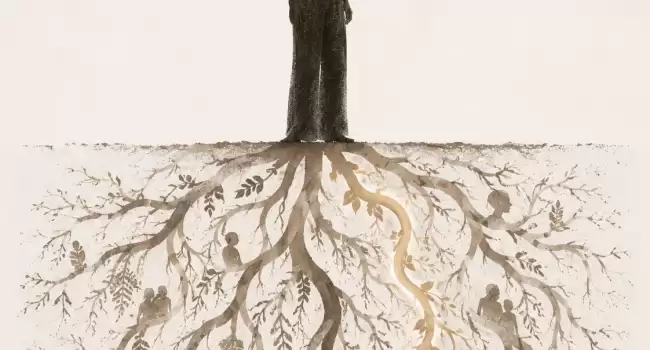
Generational patterns are behaviors, beliefs, or coping strategies passed down within a family — around emotion, conflict, boundaries, or caregiving — that can shape mental health long after the original circumstances that created them have changed. These patterns are learned, not inherited in a genetic sense, and they aren’t a formal diagnosis for you or your family.
Focusing on observable, changeable patterns rather than treating “generational trauma” as a catch-all label tends to be more useful, both for understanding what’s happening and for actually changing it.
What Generational Patterns Are
These are recurring ways of handling emotion, conflict, or responsibility that get modeled and reinforced across a family, often without anyone deciding on them explicitly. They persist because they were adaptive in some context, even if they’re no longer serving the people carrying them forward.
Common Patterns That Can Affect Mental Health
Examples include suppressing emotional expression, avoiding conflict entirely or escalating quickly, unclear or absent boundaries, over-responsibility for others’ wellbeing, and patterns around substance use or help-seeking. Not every family shares all of these, and identifying which ones actually apply to your family matters more than assuming a universal list.
How Families Pass Patterns Forward
Patterns are typically passed down through modeling — children learn how to handle stress, conflict, or emotion by watching it happen — and reinforced through repetition, especially under stress, when people tend to default to what’s familiar rather than what’s ideal.
How to Identify Your Role in the Cycle
It can help to notice moments when you react in a way that feels automatic or disproportionate, and ask where that response might have first been modeled for you. This isn’t about assigning blame — it’s about recognizing the pattern clearly enough to interrupt it.
Small Ways to Respond Differently
Change usually starts small: naming a feeling out loud instead of suppressing it, setting one boundary where there previously wasn’t one, or choosing to address a conflict directly instead of avoiding or escalating it. These small shifts, repeated, are what actually break a pattern over time.
How Individual or Family Therapy May Help
A therapist can help you map out which patterns are actually present in your family, understand their origins without assigning blame, and practice new responses in a supported way — whether working individually or with family members involved.
Explore support for changing family patterns without carrying the work alone.