
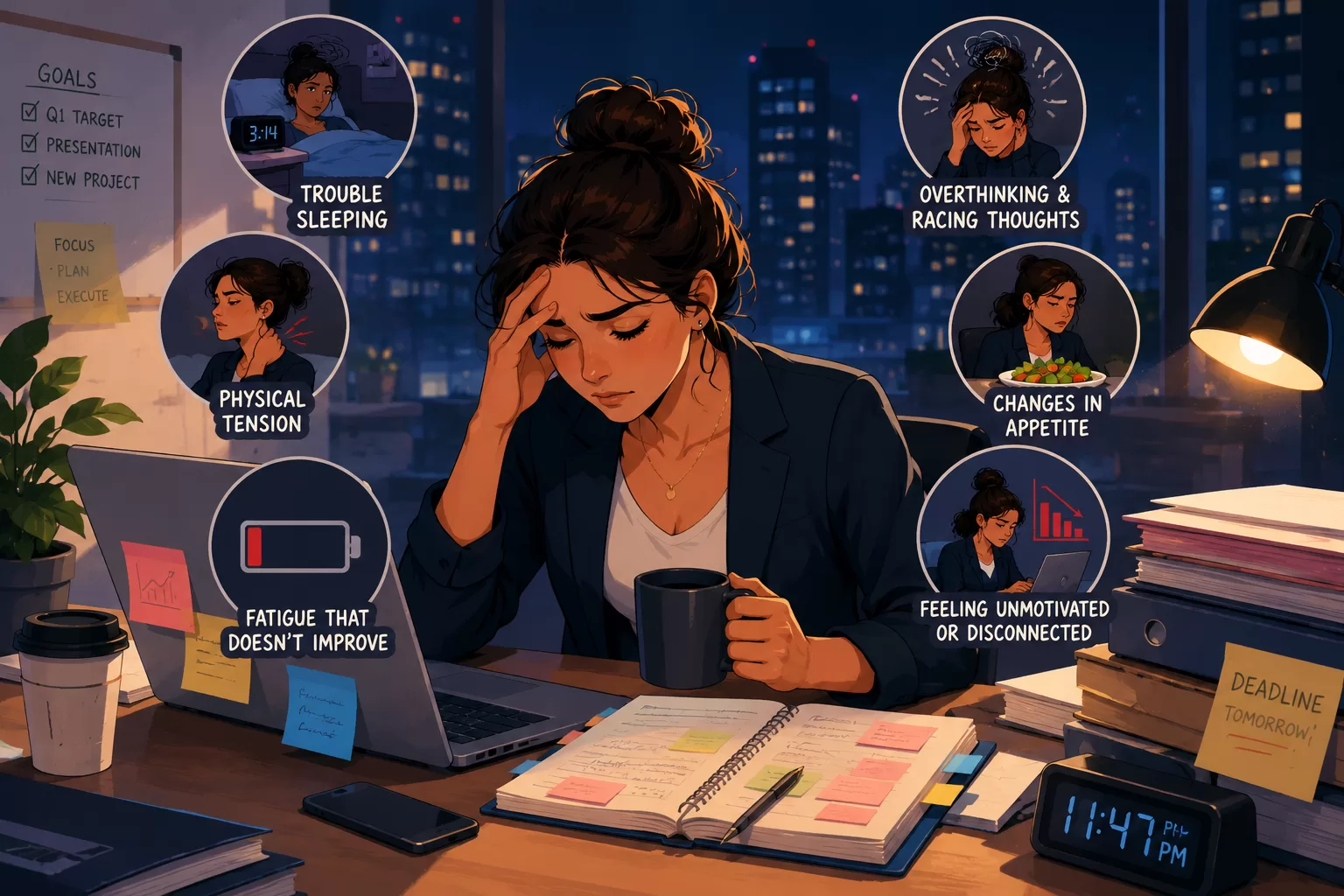








High-performing professionals often have well-developed coping mechanisms that keep chronic stress hidden longer than it might be for others — which means by the time it becomes visible, it’s frequently more advanced than it appears.
Why Chronic Stress Hides Longer in High Performers
Strong coping skills and high tolerance for discomfort — traits that often contribute to professional success — can also delay recognition of chronic stress, since the usual visible signs of struggling are actively being managed or masked.
Cognitive Signs to Watch For
These can include difficulty with decisions that used to be easy, increased forgetfulness, or a sense of mental fog that doesn’t match your usual sharpness — subtle enough to be missed if you’re not specifically looking for them.
Physical and Behavioral Signs
Sleep changes, increased reliance on caffeine or other substances to maintain performance, and a growing gap between how you look on the outside and how depleted you feel internally are common physical indicators.
Emotional Signs That Are Easy to Rationalize
Increased irritability, cynicism about work you used to care about, or a flattened emotional response to achievements can all be rationalized as “just being busy” rather than recognized as signs of chronic stress.
Why High Performers Often Delay Seeking Support
Identity tied to competence and independence can make asking for help feel like admitting failure, even when the signs of chronic stress are significant and worth addressing directly.
What to Do If These Signs Feel Familiar
Taking these signs seriously earlier — rather than waiting for a more dramatic breaking point — tends to make recovery more manageable and less disruptive to your work and life.
Address chronic stress before it becomes a bigger disruption.