








When the Body Reacts Before the Mind Can Think
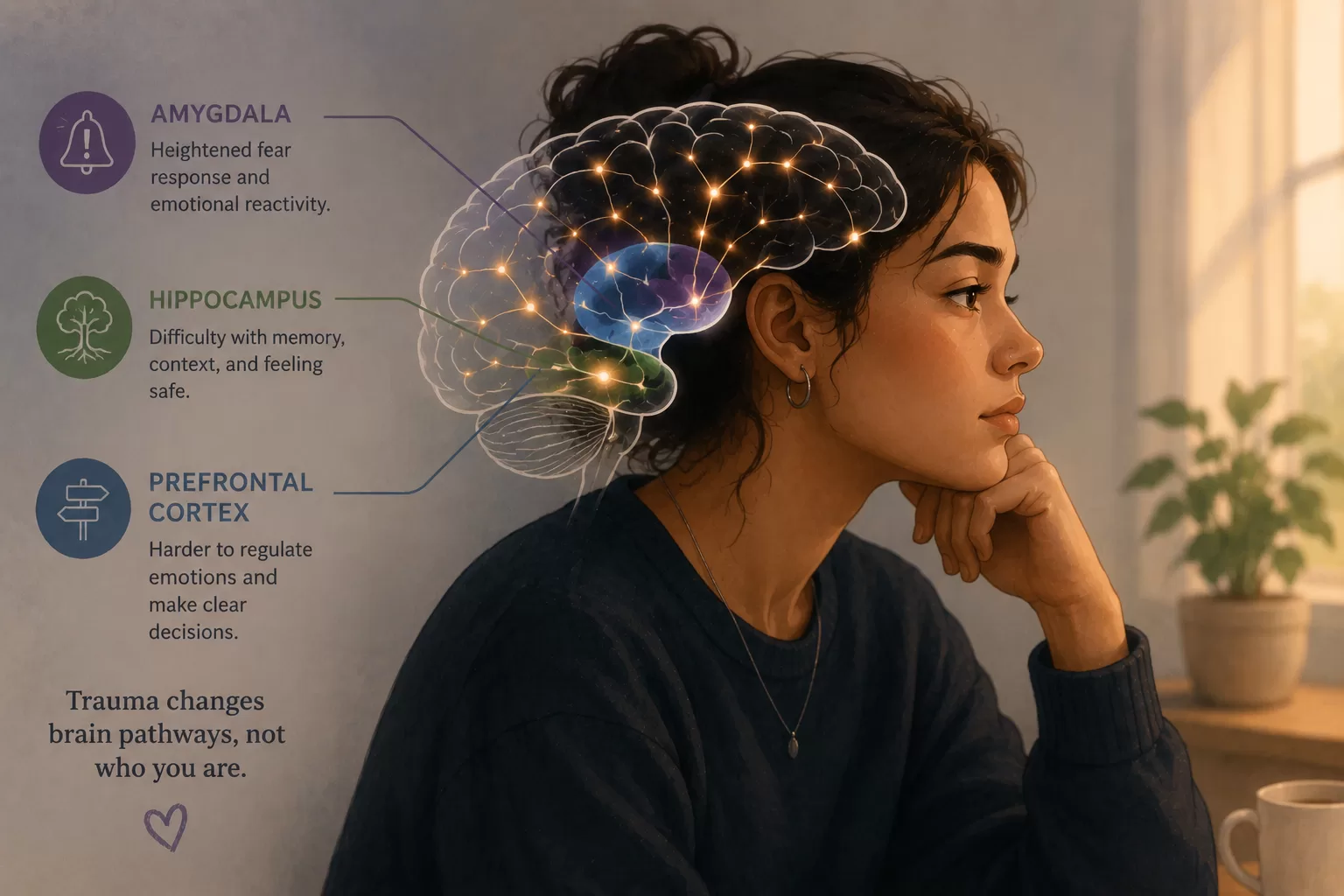
Many people who have experienced trauma eventually find themselves asking a frustrating question: “Why do I react this way?” They may understand intellectually that a situation is not dangerous, yet their body responds as though a threat is present. Their heart races, muscles tense, thoughts become difficult to organize, and emotions feel overwhelming — sometimes in situations that seem minor or manageable. These experiences often lead people to believe something is wrong with them. In reality, many of these responses reflect the way trauma can influence the brain and nervous system. Understanding these changes can help reduce shame and provide a more compassionate framework for understanding trauma-related symptoms.
The Brain’s Primary Job Is Survival
The human brain constantly gathers information about the environment. When the brain perceives danger, survival becomes the priority. The nervous system rapidly activates protective responses — heart rate increases, breathing changes, muscles prepare for action, and attention narrows toward potential threats. Under normal circumstances, these responses are temporary. Once the threat has passed, the nervous system gradually returns to a more balanced state. Trauma can disrupt this process. When experiences are overwhelming, frightening, or prolonged, the brain may begin operating as though danger remains present even after the original threat has ended, causing the nervous system to become more sensitive to stress.
How Trauma Influences Threat Detection
Following traumatic experiences, the brain often becomes highly skilled at identifying potential signs of danger. The challenge is that heightened threat detection can sometimes become overly sensitive. A person may begin reacting strongly to situations that resemble past experiences, even when those situations are objectively safe. A critical comment from a supervisor may trigger intense anxiety in someone with a history of emotional abuse. A disagreement with a partner may feel overwhelming for someone who grew up in a highly conflictual household. These reactions often occur automatically because the brain has learned to associate certain cues with danger.
Why Trauma Can Affect Emotional Regulation
Many individuals who have experienced trauma report difficulty managing emotions. When the nervous system is focused on survival, emotional flexibility often decreases. For some people, this leads to emotional flooding where feelings become so intense they are difficult to regulate. For others, the brain adapts by creating emotional distance, leading to numbness or disconnection. Neither response reflects a character flaw — both represent attempts by the nervous system to cope with overwhelming experiences.
The Brain Can Change
One of the most hopeful aspects of trauma research is the understanding that the brain remains adaptable throughout life. The concept of neuroplasticity helps explain why healing is possible. Just as the brain can learn patterns of survival, it can also learn patterns of safety. Supportive relationships, therapy, emotional regulation skills, and positive experiences can all contribute to meaningful change over time. At Trust Therapeutics, therapists provide compassionate, trauma-informed care, helping clients understand how past experiences influence present-day functioning while developing healthier ways of coping and connecting.