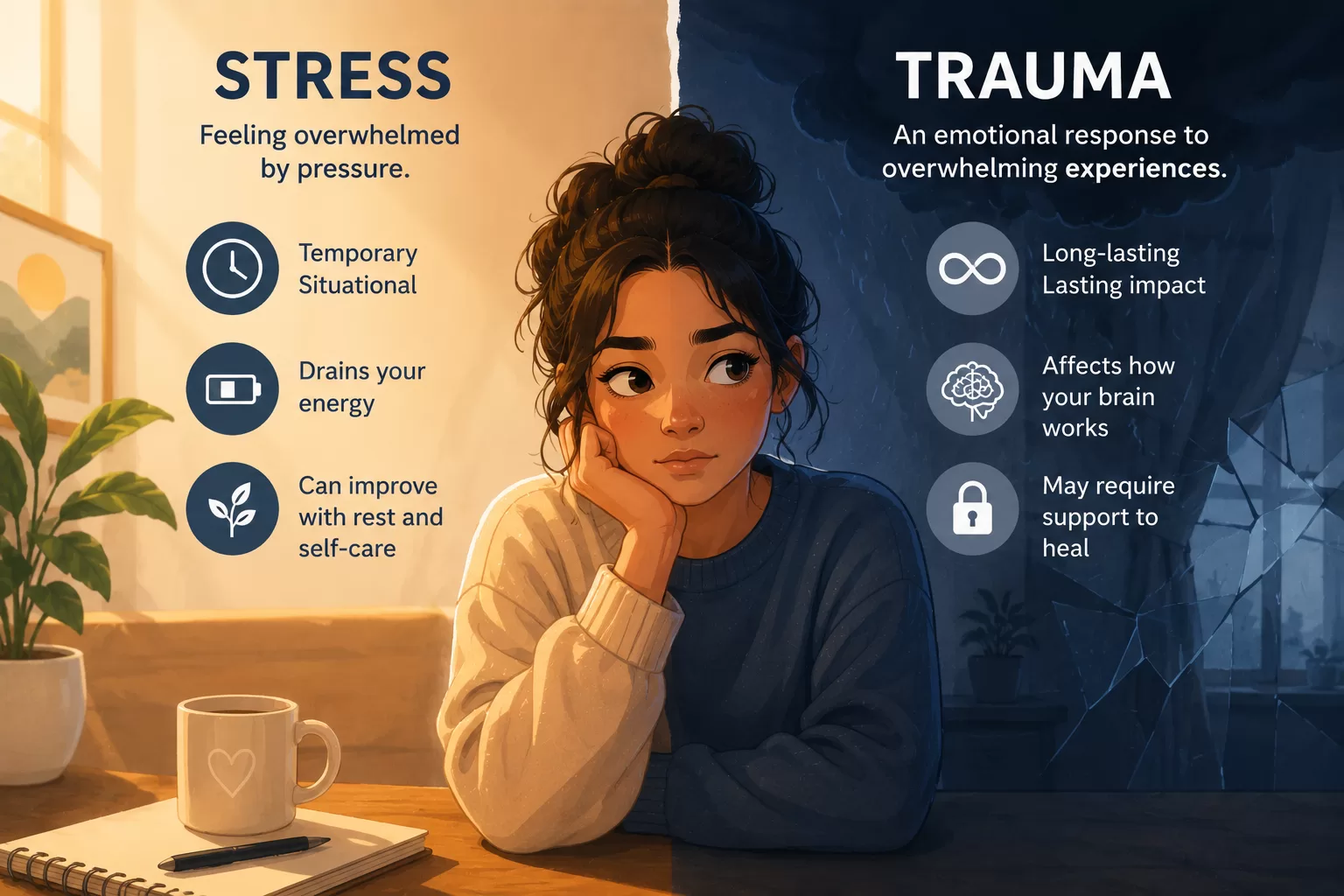









Minority stress is a framework describing the chronic, additional stress that comes from belonging to a marginalized group — stress that exists on top of, not instead of, the ordinary stressors everyone faces.
What Minority Stress Actually Refers To
It describes the cumulative toll of navigating discrimination, the anticipation of rejection, and the effort of managing disclosure decisions (who knows, when, and how) — chronic background stress that accumulates over time.
The Components of Minority Stress
This generally includes distal stressors (actual experiences of discrimination or rejection) and proximal stressors (internalized stigma, anticipation of rejection, and the effort of concealment) — both contributing independently to overall strain.
Why Minority Stress Is Chronic, Not Situational
Unlike a single stressful event, minority stress is often ongoing — a constant background calculation about safety and acceptance in new environments — which is part of why its cumulative impact can be significant even without a single dramatic incident.
How Minority Stress Affects Mental Health Over Time
Sustained minority stress is associated with elevated rates of anxiety, depression, and other mental health concerns in LGBTQ+ populations — not because of anything inherent to LGBTQ+ identity, but because of the chronic external stress of navigating an often unaccepting environment.
Recognizing Minority Stress in Your Own Life
This can include chronic vigilance in new situations, exhaustion from managing disclosure decisions, or a persistent undercurrent of anxiety that doesn’t map to any single identifiable event.
How Therapy Can Help
A therapist familiar with minority stress can help you understand its specific impact on your life and build coping strategies that address this particular kind of chronic strain, rather than generic stress management alone.
Understand and address the specific impact of minority stress.