
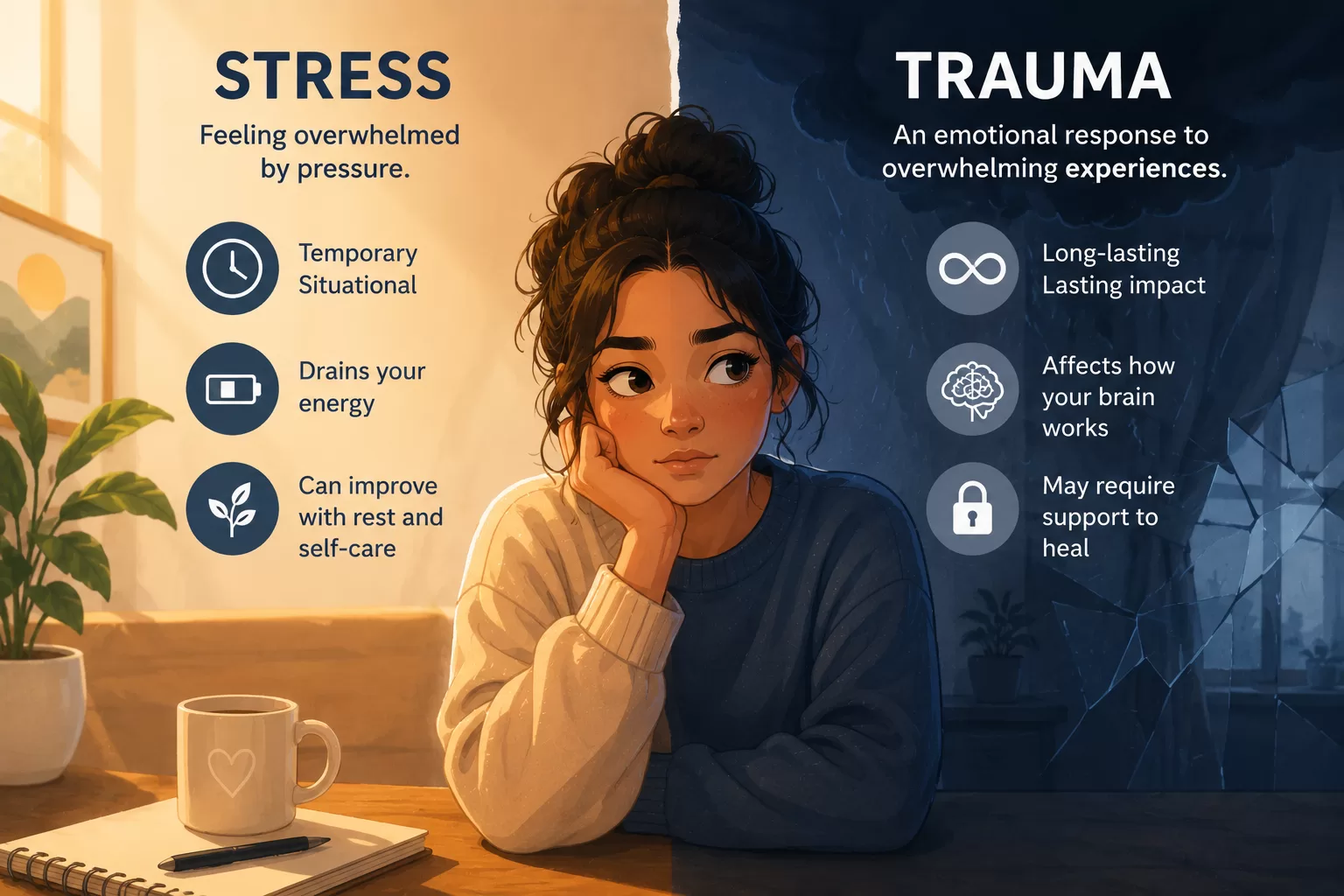








Why the Line Between Stress and Trauma Can Be Blurry
Stress is a normal part of life. Every person experiences stress at some point, whether from work responsibilities, financial concerns, relationship challenges, health issues, or major life transitions. At the same time, conversations about mental health have increased awareness of trauma, leading many individuals to wonder whether what they are experiencing is stress, trauma, or some combination of both. Because the two can share certain symptoms, distinguishing between them is not always straightforward. Understanding the difference can help individuals make sense of their experiences, reduce self-blame, and recognize when additional support may be beneficial.
Stress Is a Normal Response to Demands
Stress occurs when individuals perceive that the demands placed upon them exceed their current resources or coping capacity. The body’s stress response is designed to help people adapt to challenges and respond effectively when pressure arises. In healthy circumstances, stress tends to decrease once the challenge has passed. The nervous system returns to a more balanced state, allowing the individual to recover physically and emotionally. The key characteristic of stress is that although it may feel overwhelming, the nervous system generally remains capable of returning to baseline once the challenge has ended.
Trauma Involves Overwhelm Beyond Coping Capacity
Trauma occurs when an experience overwhelms a person’s ability to cope and creates a lasting impact on how the nervous system responds to the world. Importantly, trauma is not defined solely by the event itself — two people may experience the same situation and respond differently depending on factors such as age, support systems, previous experiences, and individual vulnerability. What distinguishes trauma from ordinary stress is not necessarily the severity of the event but the lasting impact it has on the nervous system and the individual’s sense of safety.
Why Chronic Stress Matters
The relationship between stress and trauma becomes more complex when stress is prolonged. While temporary stress may resolve once a challenge has ended, chronic stress can place ongoing demands on the nervous system. Someone experiencing years of financial insecurity, ongoing workplace hostility, chronic caregiving responsibilities, discrimination, or unstable living conditions may spend extended periods in a heightened state of alertness. Over time, this prolonged activation can affect emotional regulation, physical health, relationships, and concentration. Not everyone who experiences chronic stress develops trauma-related symptoms, but prolonged exposure to overwhelming stress can increase vulnerability.
Moving Beyond Labels
Understanding the difference between stress and trauma can be helpful, but it is important not to become overly focused on labels. What matters most is whether experiences are affecting quality of life, relationships, emotional well-being, or the ability to function in desired ways. Both stress and trauma deserve attention when they create significant distress. Seeking support does not require proving that an experience meets a specific threshold. At Trust Therapeutics, therapists provide compassionate, trauma-informed care for individuals experiencing stress, anxiety, trauma-related concerns, relationship challenges, and life transitions. Therapy can help clients better understand their emotional experiences, strengthen coping strategies, and build greater resilience.