
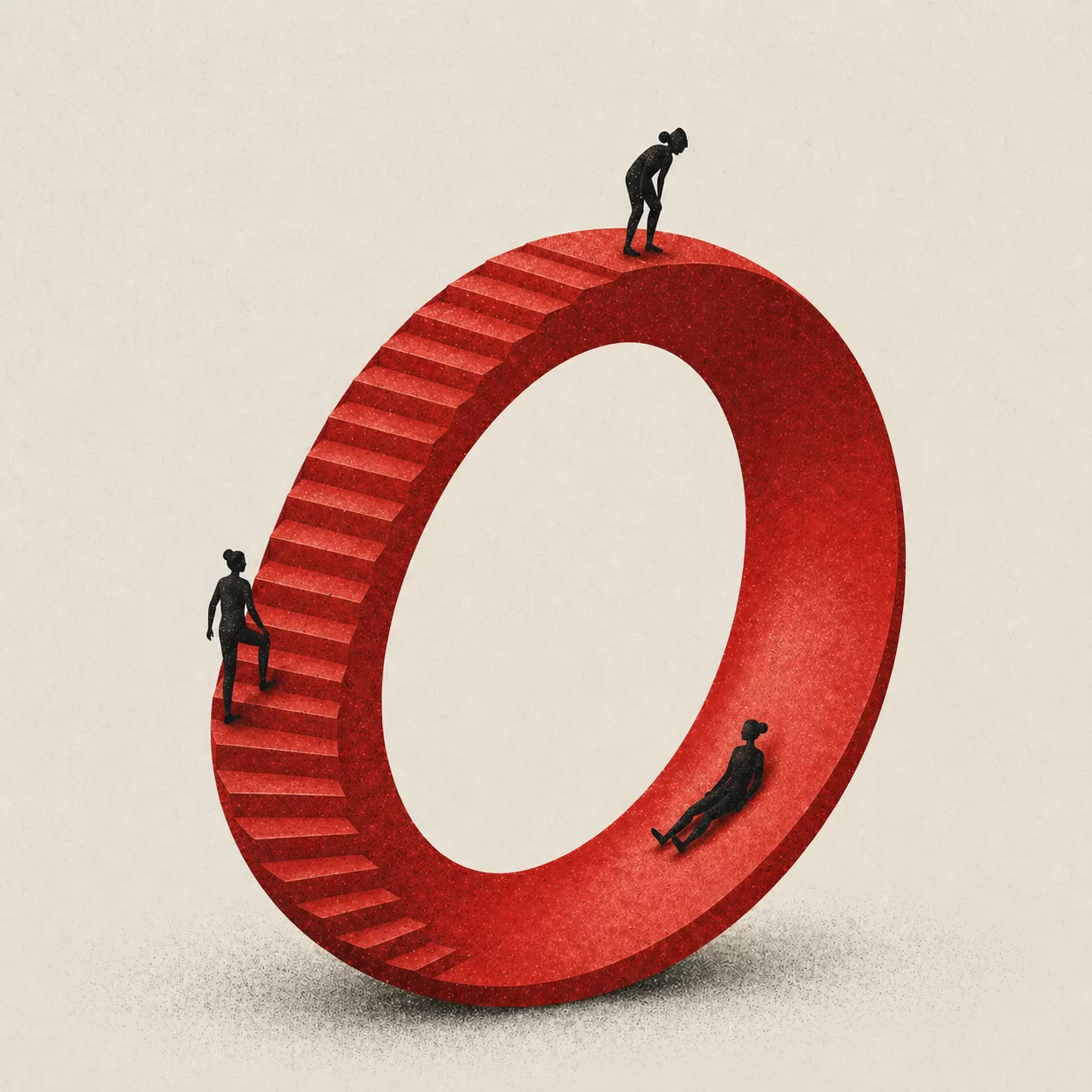








Ambition and self-worth aren’t the same thing, but they can become tangled together. Healthy ambition means caring about doing well; achievement-based self-worth means your sense of value rises and falls with your last result. If you only feel okay about yourself after a win — and feel shaky, anxious, or empty without one — that’s a sign your worth has become contingent on performance rather than something steadier.
This pattern often develops for understandable reasons — it may have been genuinely useful at some point, earning approval or safety through achievement. The difficulty is that it doesn’t scale well over time, because there’s always a next benchmark, and the relief it provides tends to get shorter with each cycle.
Healthy Ambition Versus Achievement-Based Self-Worth
Healthy ambition can coexist with a stable sense of self: you want to do well, and you still feel like a person of value on an off day. Contingent self-worth ties your basic sense of okay-ness to output, so a mistake or a slow period doesn’t just feel disappointing — it can feel like evidence about who you are.
The distinction isn’t about how driven someone is; plenty of highly ambitious people have a stable sense of self. The difference shows up in what happens internally when the achievement doesn’t come — whether it stings and passes, or whether it triggers something closer to an identity crisis.
Signs Your Value Feels Dependent on Performance
This can show up as needing constant achievement to feel calm, difficulty enjoying success because attention immediately shifts to the next goal, harsh self-criticism after any perceived failure, or a nagging sense that rest has to be earned rather than simply taken.
Another common sign is comparing yourself primarily to people who are ahead of you, rather than measuring progress against your own starting point — a habit that keeps the bar perpetually out of reach.
How the Burnout Cycle Reinforces Itself
The pattern tends to run in a loop: perform, receive temporary relief or approval, raise the internal standard to keep that feeling, become afraid to slow down because slowing down might mean losing ground, and eventually burn out from the pace that pattern demands.
Each cycle can make the next one feel more urgent, not less, because the relief from achievement tends to fade faster each time — requiring a bigger or faster win to get the same feeling.
Why Rest Can Trigger Guilt or Anxiety
When self-worth is tied to output, rest can start to feel dangerous — like falling behind, losing an edge, or becoming lazy. This isn’t a character flaw; it’s a predictable result of a value system built entirely around doing rather than being.
Ways to Build a More Stable Sense of Self
Some approaches that can help over time: naming your values outside of achievement, deliberately noticing moments of rest or ordinary life without treating them as wasted time, and practicing separating a single result from your overall worth as a person.
These shifts tend to happen gradually, through repeated practice rather than a single insight. Many people find it helpful to track moments when they felt okay about themselves without having just accomplished something, as a way of building evidence against the old pattern.
How Therapy May Help Break the Cycle
A therapist can help you understand where this pattern may have taken root, work through the shame or anxiety that often drives it, and practice separating performance from personal value in a structured way. This work often overlaps with addressing perfectionism directly, since the two frequently reinforce each other.
Talk with a therapist about ambition that no longer feels sustainable.