







Boundaries take on a specific importance when your identity itself is sometimes met with questions, judgment, or outright rejection. Learning to protect your energy and safety without abandoning relationships you value is an ongoing, learnable skill.
Why Boundaries Matter More in This Context
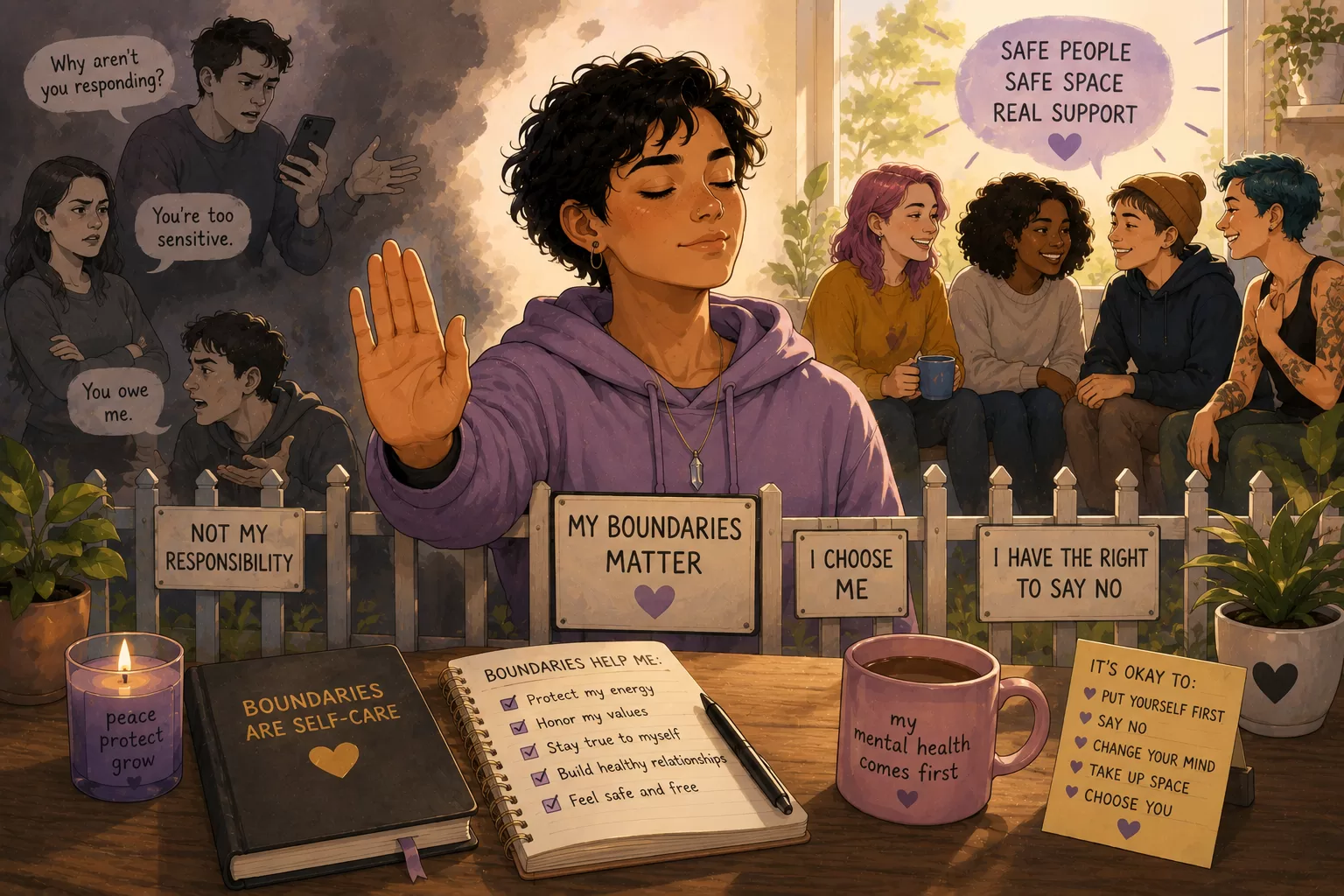
Without clear boundaries, it’s easy to end up managing other people’s discomfort with your identity at your own expense — explaining, justifying, or minimizing yourself to keep interactions smooth.
Boundaries Around Disclosure
You’re not obligated to disclose your identity to everyone, in every setting. Deciding who has access to that information, and when, is a reasonable and protective boundary, not something requiring justification.
Boundaries With Family or People Who Aren’t Fully Accepting
It’s possible to maintain a relationship with someone while limiting what topics you engage on, or how much emotional energy you invest in changing their views — a boundary that protects you without necessarily ending the relationship.
Boundaries in Unsupportive Work or Social Environments
Deciding how much of yourself to bring into environments that don’t feel fully safe is a legitimate, ongoing calculation — not a compromise of authenticity, but a form of self-protection.
What Healthy Boundary-Setting Sounds Like
Direct, calm statements — “I’m not going to discuss that” or “I need you to use my correct name” — tend to be more sustainable than either avoiding the topic entirely or engaging in extended justification.
How Therapy Can Support Boundary-Setting
A therapist can help you identify where boundaries are needed, practice articulating them, and process the guilt or anxiety that can come with asserting them, especially with family.
Build boundaries that protect your energy and your identity.