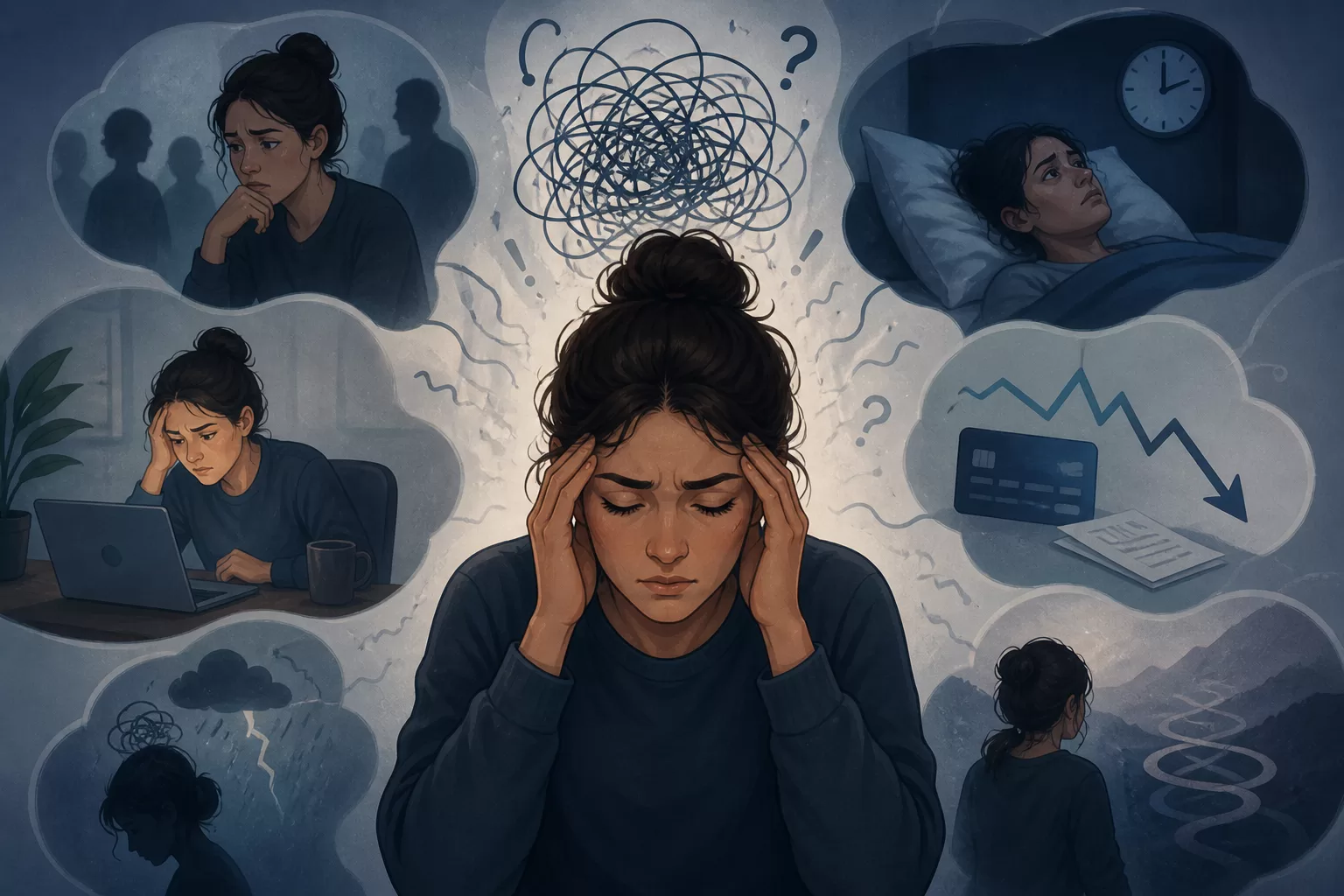









Stress is a normal part of college life, but there’s a difference between the ordinary pressure of exams and deadlines and the deeper exhaustion of burnout. Recognizing that difference early can make it easier to get support before things become harder to manage — whether you’re a full-time student living on campus, commuting, working alongside classes, or balancing school with other responsibilities.
Because student culture often treats exhaustion as a normal, even expected, part of the experience, it can be harder to notice when ordinary stress has shifted into something that needs more attention.
Stress Versus Burnout in College
Ordinary academic stress tends to rise around specific deadlines and ease afterward. Burnout builds over time and doesn’t fully resolve with a break — it shows up as a more persistent sense of exhaustion, detachment, or declining performance that outlasts any single stressful week.
Academic, Emotional, Physical, and Social Signs
Academic: avoidance of coursework, missed classes, or a noticeable decline in the quality of work.
Emotional: irritability, feeling detached from schoolwork, or a loss of interest in subjects you used to care about.
Physical: sleep disruption, fatigue that doesn’t lift with rest, or getting sick more often.
Social: withdrawing from friends, skipping activities you’d normally enjoy, or feeling isolated even around other people.
Why Students Miss the Warning Signs
Academic culture often normalizes exhaustion and treats pushing through as a badge of honor, which can make early signs of burnout easy to dismiss. Students juggling work, family responsibilities, or being far from home for the first time may also have less bandwidth to notice a gradual decline until it becomes more serious.
What to Do This Week
If you’re noticing these signs now, start small: pick one class or assignment to prioritize rather than trying to catch up on everything at once, protect a specific block of sleep, and reach out to at least one person — a friend, family member, or campus resource — rather than managing it entirely alone.
How to Ask Professors, Family, or Campus Supports for Help
Most institutions offer some form of academic or wellness support, even if the exact services vary by school — it’s worth checking what’s available where you are. A simple, direct message to a professor (“I’m having a difficult week and want to talk about my options for this assignment”) is often better received than students expect.
This applies just as much to commuters, working students, international students, and those balancing school with family responsibilities — asking for support isn’t limited to students living the traditional on-campus experience.
When Therapy May Be Useful
If exhaustion, avoidance, or isolation is affecting your ability to function — attending class, maintaining relationships, or completing basic daily tasks — that’s a reasonable point to consider talking with a therapist, in addition to any campus resources available to you.
Request support if stress is affecting attendance, sleep, relationships, or the ability to function.