
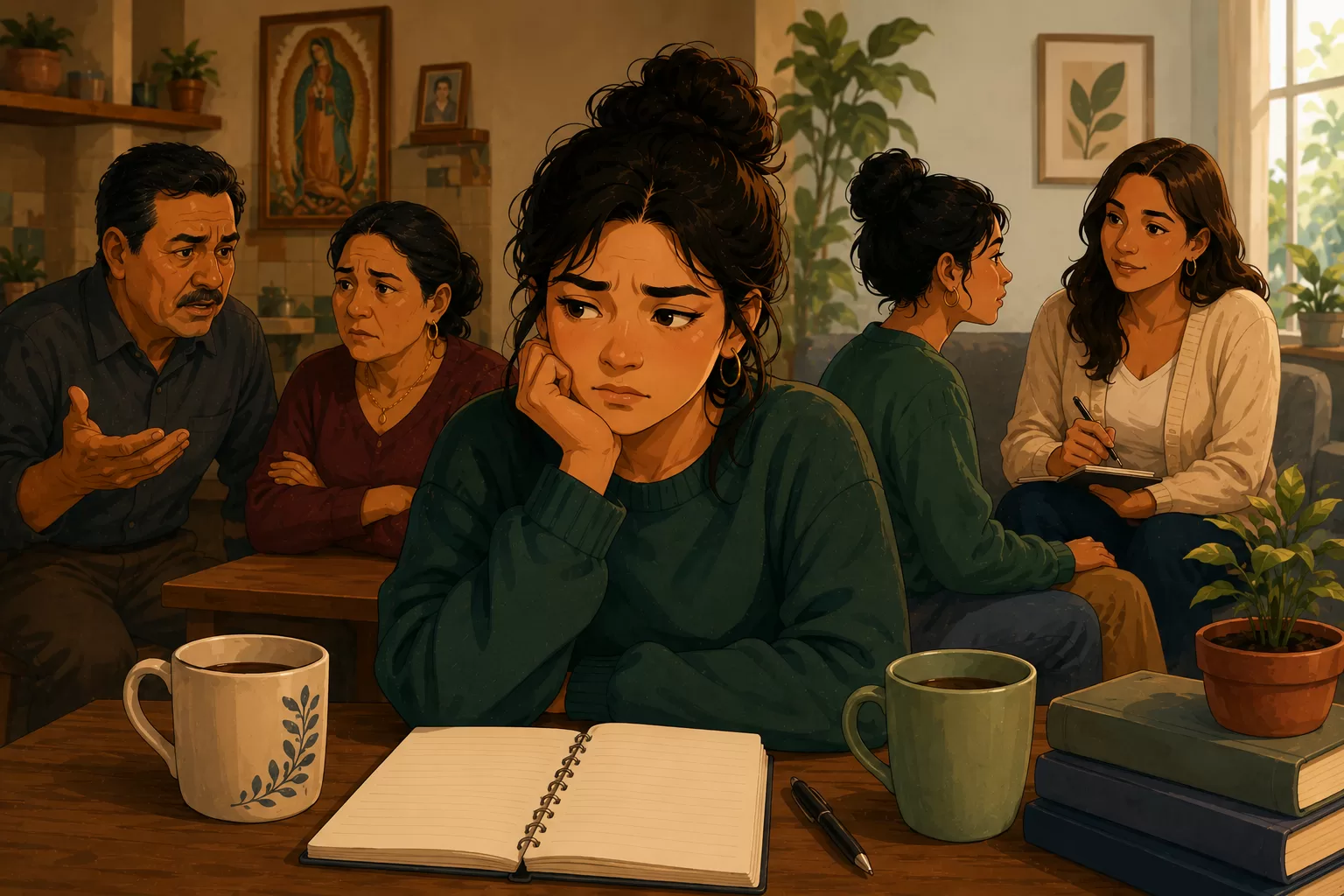








Burnout in immigrant and first-generation communities often goes unrecognized — not because it isn’t happening, but because it’s frequently normalized as simply what building a new life or supporting a family requires.
Why This Burnout Is Often Invisible
When hard work and sacrifice are framed as expected, even admirable, the exhaustion that comes with sustained overextension can be mistaken for a normal cost of doing what’s necessary, rather than a sign that something needs to change.
Unique Sources of Chronic Strain
These can include financial pressure, navigating unfamiliar systems, language barriers, family obligations across generations or countries, and the ongoing effort of building stability in a new context — often all at once.
The Weight of Being the Family’s Anchor
Many first-generation individuals carry significant responsibility — translating for family members, managing paperwork, providing financial support — a role that rarely comes with acknowledgment of its cumulative toll.
Why Rest Can Feel Unearned or Impossible
When survival and stability have required constant effort, rest can feel like a luxury that hasn’t been earned yet, even when exhaustion is significant and ongoing.
Recognizing the Signs in Yourself or a Loved One
Persistent exhaustion, irritability, a sense of being stretched too thin across responsibilities, or physical symptoms with no clear medical cause are all worth paying attention to rather than dismissing as simply part of the deal.
How Therapy Can Help
A therapist who understands this context can help you name what’s happening without judgment, and work toward a more sustainable way of carrying real responsibilities without burning out in the process.
Talk with a therapist who understands the specific weight of building a new life.