
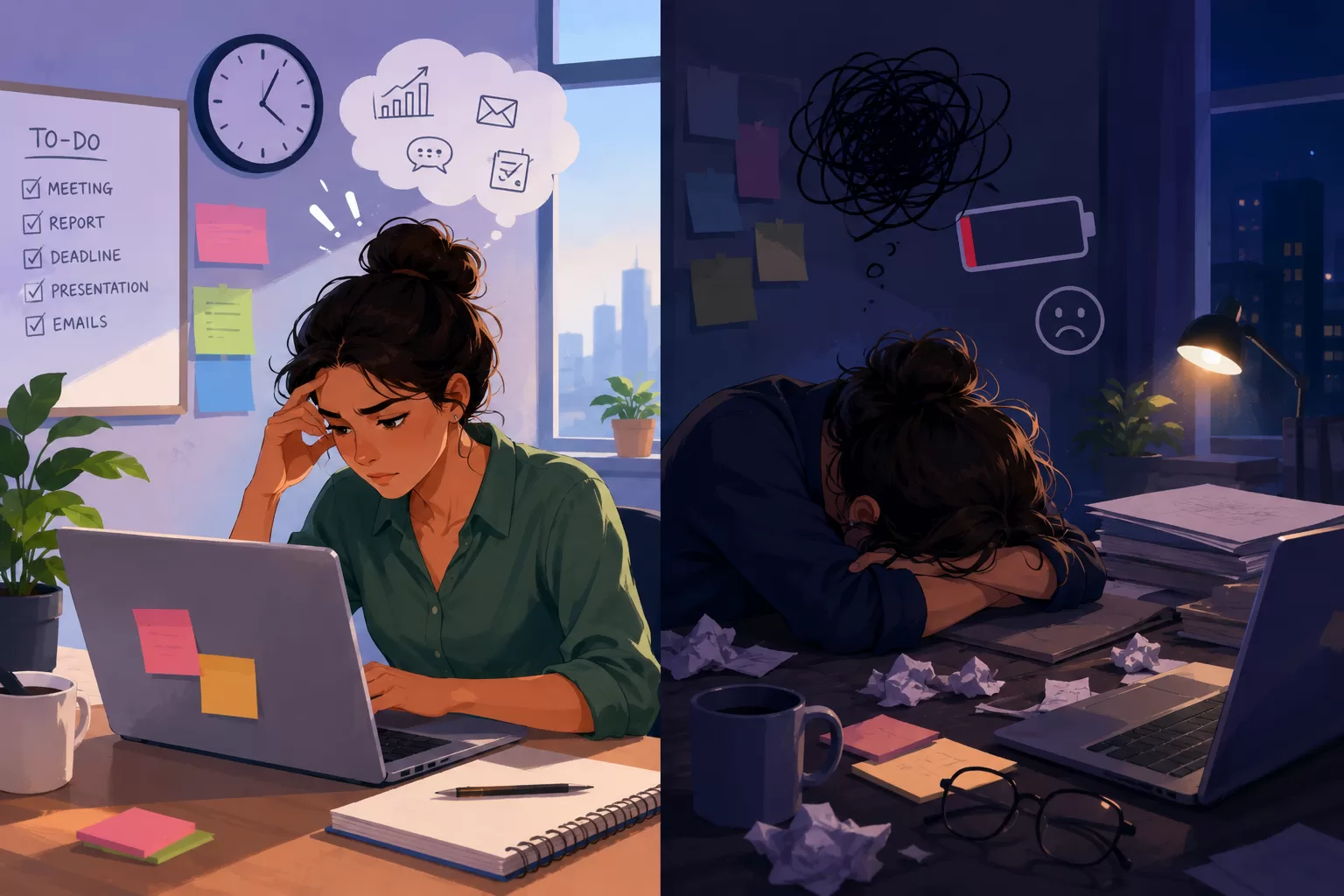








Stress and burnout are often used interchangeably, but they’re distinct experiences that call for different responses. Telling them apart can help you address what’s actually happening rather than applying the wrong fix.
The Core Difference
Stress is generally proportional to a specific demand and eases once that demand passes. Burnout is a more persistent state that builds over time and typically doesn’t resolve just because a busy period ends.
How Each One Feels Day to Day
Stress often feels like urgency or pressure tied to something specific. Burnout tends to feel more like exhaustion, detachment, or cynicism that’s present even on days without a specific stressor.
What Happens When You Rest
A weekend off typically helps with ordinary stress. If exhaustion persists despite genuine rest, that’s a stronger indicator of burnout than of simple stress.
The Role of Meaning and Engagement
Stress usually doesn’t change how you feel about the work itself. Burnout often includes a loss of meaning or engagement with work you previously found satisfying — a shift worth noticing.
Why the Distinction Matters for Recovery
Ordinary stress often responds to short-term coping strategies. Burnout typically requires more substantial changes — reduced load, addressing underlying patterns, sometimes professional support — to actually resolve.
When to Seek Support
If what you’re experiencing sounds more like burnout than stress, or if you’re not sure which one applies, a conversation with a therapist can help clarify what’s happening and what kind of change might actually help.
Get clarity on what you’re experiencing and what would actually help.