
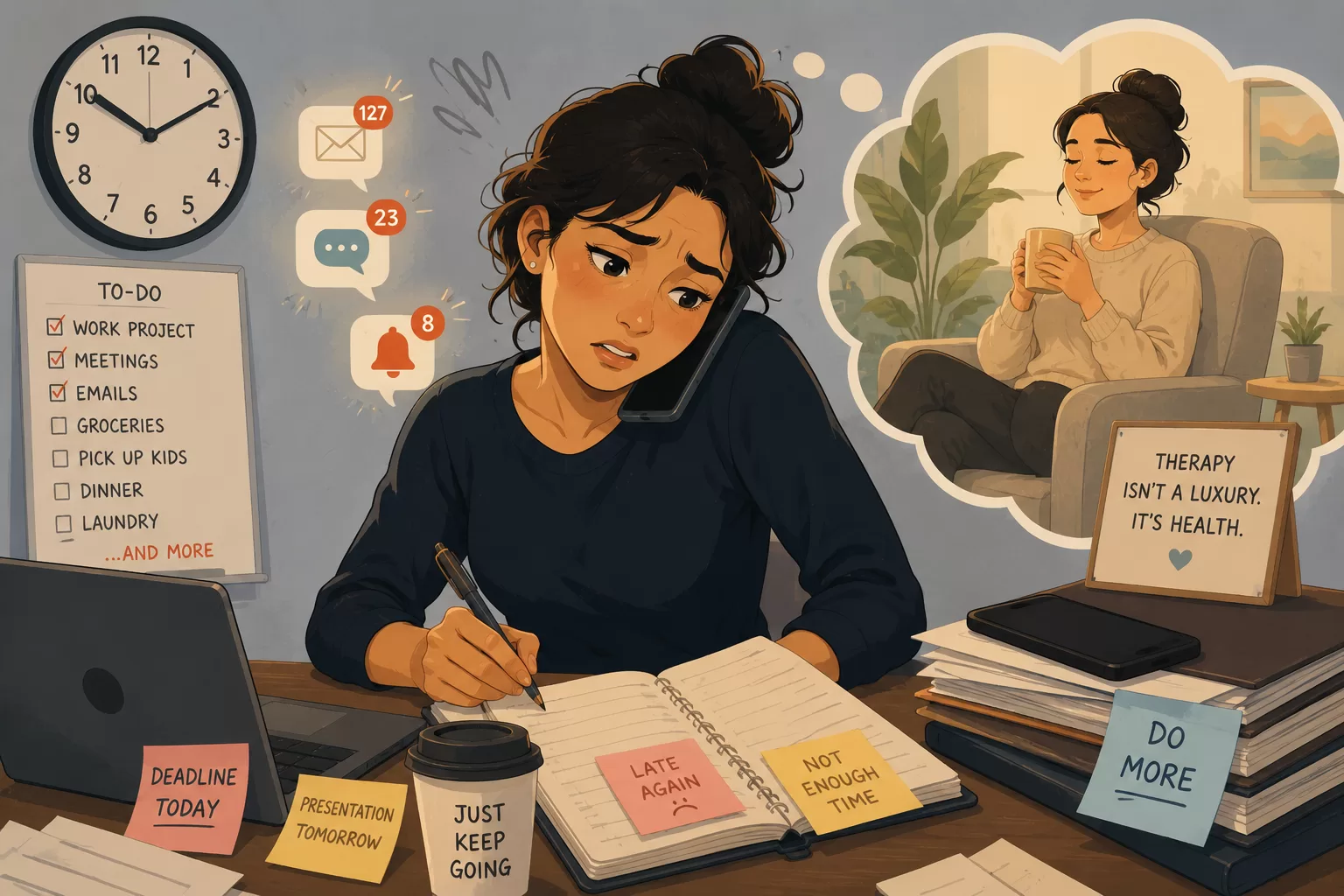








When “No Time” Is the Problem
One of the most common reasons people give for avoiding therapy is also one of the most revealing: “I don’t have time.” At first glance, this response makes sense. Many people are balancing work, school, caregiving, finances, relationships, commuting, deadlines, and constant responsibilities all at once. But sometimes, feeling too busy for emotional support can actually signal how overwhelmed someone has become. Many individuals wait until they are emotionally exhausted, burned out, or struggling significantly before considering therapy — telling themselves they will seek support “once things calm down,” yet life often continues at the same pace for months or even years.
Being Busy Does Not Mean You Are Emotionally Okay
Someone may continue succeeding professionally, caring for family members, attending classes, or maintaining routines while privately feeling anxious, emotionally disconnected, exhausted, or constantly overwhelmed. Because responsibilities are still getting done, people may assume their stress “isn’t that bad.” But functioning and feeling emotionally well are not the same thing. Many high-functioning individuals delay support because they believe they need to reach a crisis point before therapy is justified. In reality, therapy can be helpful long before someone reaches emotional collapse.
Chronic Stress Can Quietly Become Normal
Stress often builds gradually rather than dramatically. People adapt to increasingly high levels of emotional pressure until constant tension begins to feel normal. Someone may stop noticing that they feel mentally overstimulated all the time, struggle to fully relax, feel emotionally numb or disconnected, feel irritable more often, experience chronic exhaustion, or feel guilty resting or slowing down. These patterns become so familiar that individuals stop questioning them altogether.
Emotional Avoidance Can Disguise Itself as Busyness
Sometimes people stay constantly busy because slowing down feels emotionally uncomfortable. Work, caregiving, productivity, scrolling online, or overcommitting socially can all become ways of avoiding difficult emotions without fully realizing it. When life finally becomes quiet, anxiety, sadness, loneliness, or exhaustion may become harder to ignore. This does not mean someone is intentionally avoiding emotions — often, busyness becomes a coping strategy people develop gradually over time.
Therapy Is Not Only for Crisis Situations
Many people pursue therapy for reasons like chronic stress and burnout, anxiety or emotional overwhelm, relationship difficulties, work-life imbalance, family pressure or caregiving stress, difficulty setting boundaries, or simply wanting healthier coping strategies. Therapy is not only about “fixing problems” — it provides space for reflection, emotional support, self-awareness, and healthier stress management before things become unmanageable.
How Therapy Can Help
At Trust Therapeutics, therapy is approached with warmth, flexibility, and understanding that many people are carrying invisible emotional pressure while continuing to function outwardly. If you keep telling yourself you do not have time to care for your emotional well-being, it may be worth asking why your needs have been pushed so far down the list for so long. You deserve support before you reach a breaking point.