
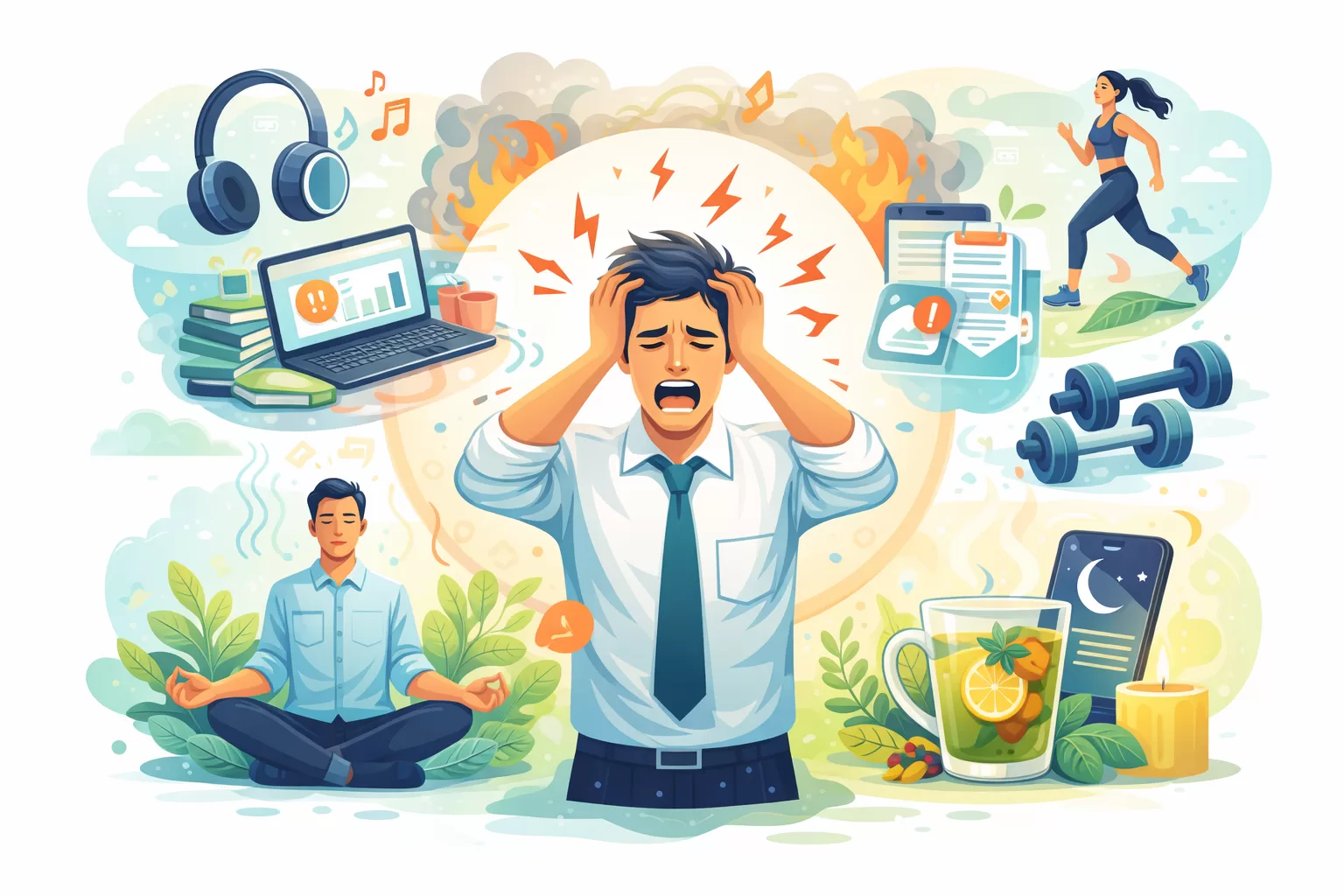








Most stress-management advice assumes free time that doesn’t exist for people managing a full schedule. What tends to work better is smaller, realistic adjustments that fit inside a day that isn’t going to get less busy anytime soon — changes that reduce the load a schedule creates rather than add one more obligation on top of it.
If you only have a couple of minutes right now, start here: pick one small transition point in your day — leaving work, closing your laptop, or getting in the car — and use it as a deliberate pause. A few slow breaths and a conscious shift of attention away from the day’s demands can interrupt the momentum of stress before it carries into the evening.
Why Generic Stress Advice Fails Busy Professionals
Suggestions like “take a long walk” or “block out an hour to meditate” can feel like one more task rather than relief when your schedule is already full. The goal isn’t to add self-care on top of an already full plate — it’s to reduce the load the schedule creates in the first place.
Techniques That Fit Inside an Existing Workday
Build in short breaks before you feel completely depleted, rather than waiting until exhaustion forces a stop.
Focus on one task at a time where possible, instead of constantly splitting attention across several.
Notice early signs of rising stress — tension, irritability, distraction — instead of waiting for a breaking point.
Create a general end point to the workday, even when the to-do list isn’t finished.
These adjustments work by reducing overall load rather than adding another obligation to your day. None of them require carving out extra time — they change how existing time is used.
How to Reduce Mental Carryover After Work
Mental carryover — replaying the day, mentally drafting tomorrow’s messages, staying half-engaged with work even after logging off — is one of the biggest drains on rest.
A brief, consistent shutdown routine (closing tabs, writing down tomorrow’s first task, physically changing locations) can help signal to your mind that the workday is actually over, even when the underlying stress hasn’t fully resolved.
A Seven-Day Stress-Management Plan
Day 1: Identify one transition point in your day to use as a deliberate pause.
Day 2: Notice and write down your earliest physical sign of stress.
Day 3: Set one small boundary, like not checking messages during a specific window.
Day 4: Practice ending the workday at a set time, even with unfinished tasks.
Day 5: Try single-tasking for one block of your day.
Day 6: Build a short shutdown routine for the end of the workday.
Day 7: Review what helped and what didn’t, and keep only what fit.
When Stress May Be Becoming Burnout
Ordinary stress tends to ease once a demanding period passes. If the exhaustion, cynicism, or reduced sense of accomplishment doesn’t lift even after time off, that’s a sign the pattern may have moved from stress into burnout, which usually needs more than short-term coping techniques to resolve.
How Therapy Can Support Sustainable Performance
A therapist can help you build stress-management strategies suited to your specific schedule and role, and can help address the underlying patterns — difficulty delegating, perfectionism, trouble disconnecting — that make stress harder to manage in the first place.
Request flexible therapy support built around the realities of a demanding schedule.