








The Gap Between Knowing and Doing
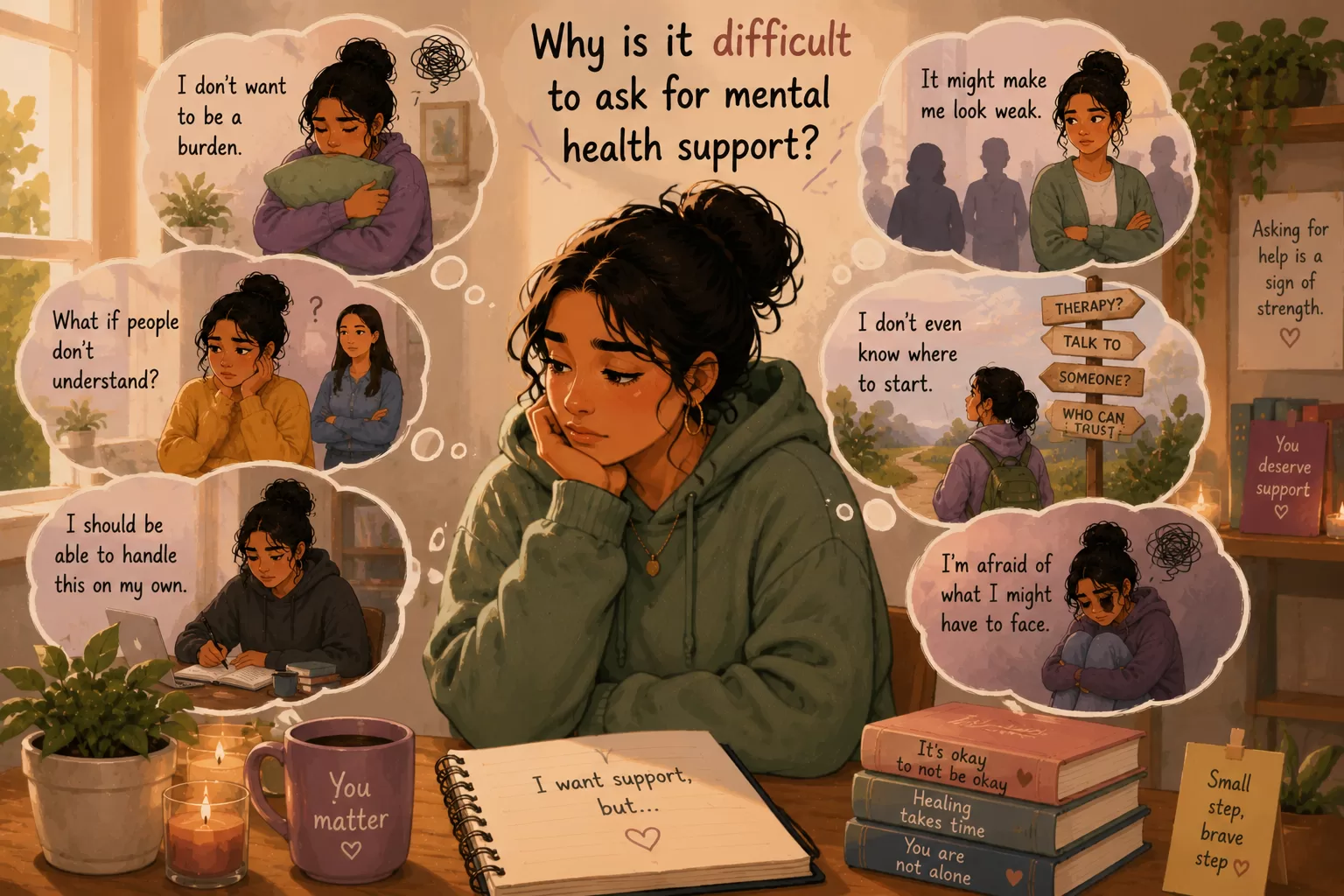
There is a common misconception that asking for help should be easy. Many people recognize that mental health is important, yet despite increased awareness, they continue to struggle in silence. If you’ve ever found yourself saying “I’ll deal with it later,” “I don’t want to burden anyone,” or “Other people have it worse than I do,” you are far from alone. The hesitation to seek help is rarely about weakness. More often, it is shaped by life experiences, family beliefs, cultural values, previous interactions with healthcare, and personal fears.
Where These Patterns Begin
For many people, the idea of handling problems independently develops early in life. Children often learn by observing the adults around them. If caregivers rarely talked about emotions, children may grow up believing that emotional struggles should remain private. Cultural beliefs can also influence how people think about mental health — some communities value privacy and believe personal struggles should stay within the family. Others may have experienced generations of hardship where survival required focusing on immediate needs rather than emotional well-being.
Fear, Comparison, and Misunderstanding
Fear of judgment is another powerful barrier. Many people worry about being labeled as weak, incapable, or overly sensitive. Others don’t believe their struggles are serious enough — they compare themselves to people who appear to be experiencing greater hardship and conclude they should simply be grateful. Another reason people delay seeking support is that they misunderstand what therapy actually involves. In reality, therapy is a collaborative process built around listening, understanding, and helping clients develop practical tools that fit their individual goals.
Disability, Access, and Additional Barriers
Disability Pride Month reminds us that asking for mental health support may involve additional barriers for people with disabilities. Emotional concerns may be overlooked by providers or dismissed as simply part of living with a disability. Others may encounter physical or communication barriers that make accessing mental health services more difficult. Accessible mental health care means recognizing that emotional well-being matters for everyone — regardless of ability.
How Therapy Can Help
At Trust Therapeutics, we understand that taking the first step toward therapy can feel intimidating. Our compassionate therapists provide culturally responsive, individualized care in a welcoming environment. Asking for help is a skill — and like any skill, it becomes easier with practice. You do not have to earn the right to receive support. Your emotional well-being matters simply because you are human.