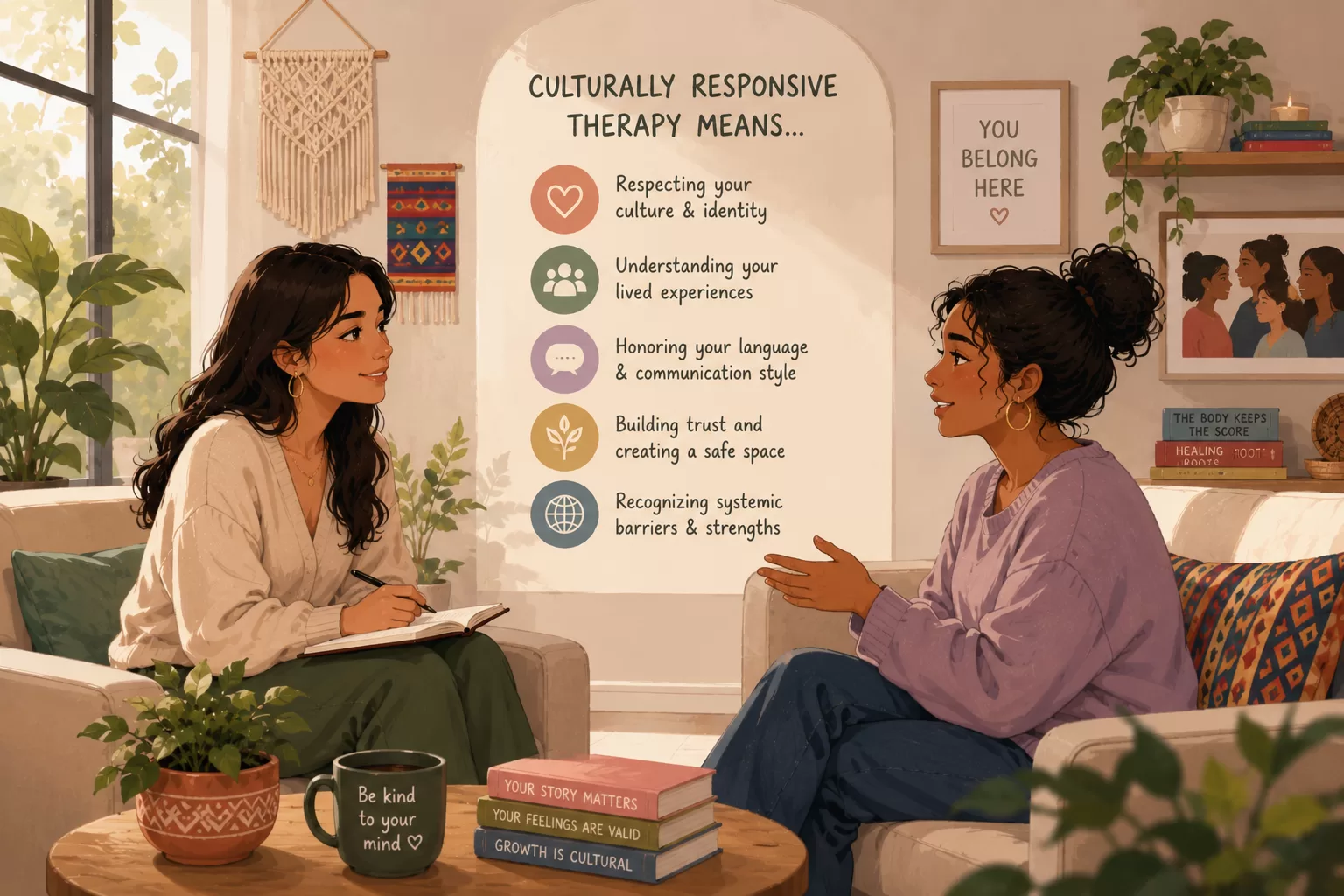









“Trauma-informed” is a phrase you may see often, but what does it mean once you are in the room, or on a video call? At its core, it means care that is built around safety, trust, and your sense of control.
Pacing
You are not expected to tell your whole story right away. A trauma-informed therapist typically lets you set the pace and may focus first on stability and coping before exploring painful memories.
Consent and Choice
Choice runs through the whole process. You can say no, ask for a pause, or change direction. Your therapist should explain what they are doing and why.
Goals
Together you and your therapist clarify what you want, such as feeling safer in your body, sleeping better, or reducing the pull of reminders. Progress is checked in with along the way.
Questions to Ask a Clinician
- How do you approach pacing when someone has experienced trauma?
- What happens if a session feels like too much?
- What training do you have in trauma-focused care?
- How will we decide on goals together?
Feeling comfortable asking these questions is part of the process, and a good clinician welcomes them.