
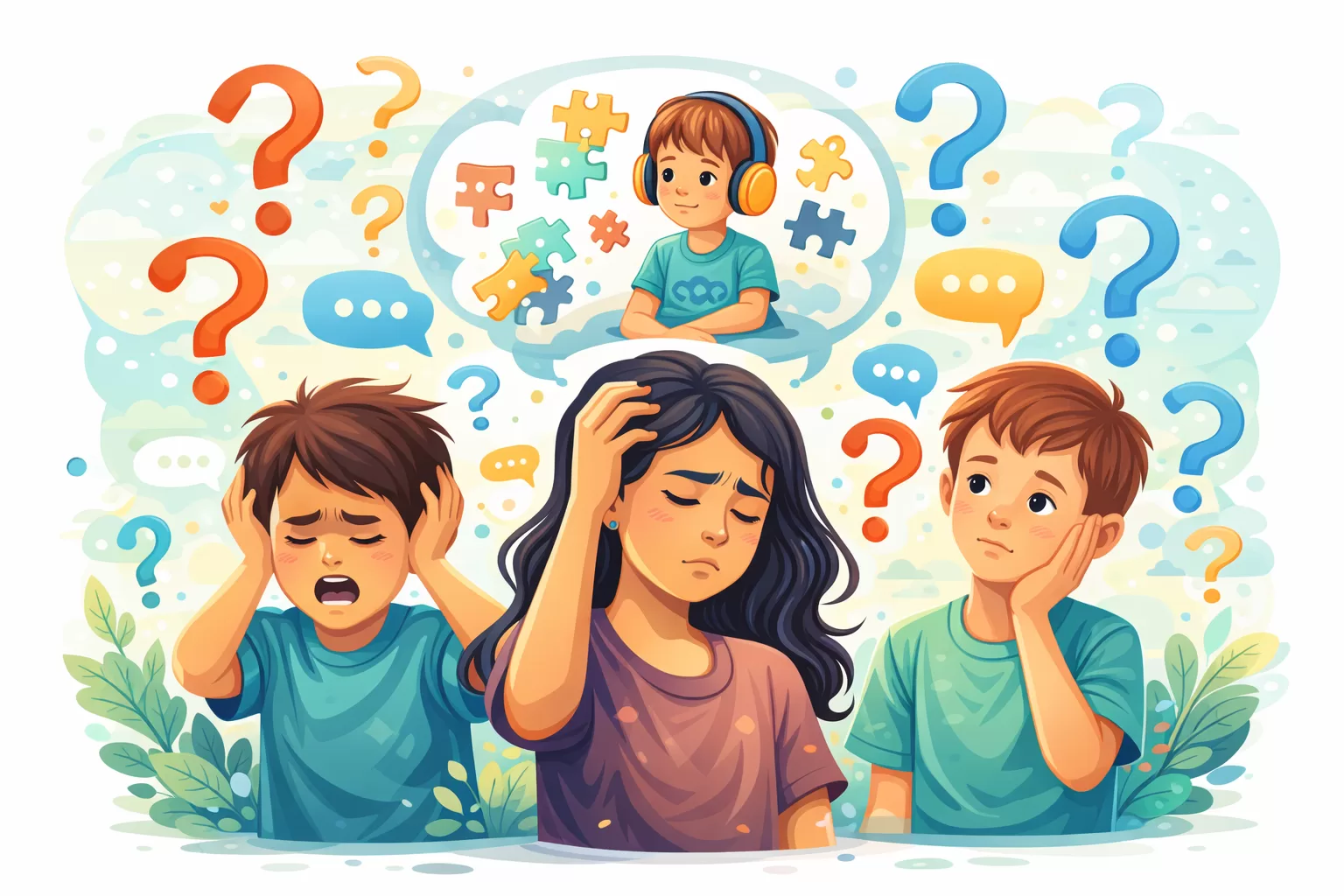








Stress in autistic children and teens can look different from stress in neurotypical peers, which raises specific, common questions for parents trying to understand what’s happening and how to help.
Does Stress Look Different in Autistic Kids?
It can. Stress may show up as increased meltdowns or shutdowns, changes in stimming behavior, rigidity around routine, or physical symptoms — sometimes more visibly than the verbal expression of stress typical in neurotypical peers.
How Can I Tell if My Child Is Stressed Versus Just Having a Hard Day?
Persistence and pattern matter more than a single difficult day. If changes in behavior, sleep, or mood continue over multiple days or weeks, that points more toward an ongoing stressor than an isolated bad day.
What Are Common Sources of Stress for Autistic Kids?
These can include sensory overload, unexpected changes to routine, social demands, or academic environments not suited to their needs — though the specific source varies significantly by individual child.
How Can I Help My Child Communicate Their Stress?
Some children benefit from non-verbal communication tools — visual scales, written options — rather than being expected to verbally articulate distress in the moment, especially during a shutdown or meltdown.
Should I Change My Child’s Routine to Reduce Stress?
Predictability tends to reduce stress for many autistic children, but some flexibility-building is also valuable long-term. This balance is highly individual and often worth discussing with a professional familiar with your child.
When Should We Seek Professional Support?
If stress is persistent, escalating, or significantly affecting your child’s functioning at home or school, a therapist experienced with autistic children can help build a tailored plan.
Get support understanding and responding to your child’s stress.